Corporate Team Building Explained: Impact and Best Practices
Over 80 percent of American companies now invest in team building programs, reflecting a major shift in how organizations approach workplace success. As collaborative projects become the norm, effective teamwork is more vital than ever. Discover how today’s corporate team building goes far beyond icebreakers, using playful techniques to fuel communication, innovation, and real results for modern American businesses.
Table of Contents
- Defining Corporate Team Building Today
- Types Of Team Building Activities
- Key Benefits For Corporate Performance
- Planning And Executing Successful Events
- Common Mistakes And How To Avoid Them
Key Takeaways
| Point | Details |
|---|---|
| Contemporary Team Building | Modern team building enhances collaboration and communication, moving beyond forced social interactions to strategic organizational development. |
| Diverse Activity Types | Effective team building includes activities like problem-solving exercises, communication workshops, and creative collaboration to achieve specific goals. |
| Key Benefits | Strategic team building improves communication, fosters psychological safety, and enhances organizational resilience, directly impacting performance. |
| Avoiding Common Mistakes | Successful team building demands careful consideration of group dynamics, clear objectives, and genuine engagement to prevent common pitfalls. |
Defining Corporate Team Building Today
Corporate team building represents a strategic approach organizations use to enhance collaboration, communication, and collective performance among employees. Modern team building transcends traditional perceptions of forced social interactions, evolving into a sophisticated methodology for organizational development.
At its core, team building leverages playful inquiry and innovation methods that serve complex problem-solving objectives within professional environments. These activities are carefully designed to address workplace dynamics, encouraging employees to develop stronger interpersonal relationships and improve overall team effectiveness. Play at work helps employees function more effectively under stress, trigger creativity, and prevent professional burnout.
Effective corporate team building encompasses several key dimensions:
- Interpersonal skill development
- Communication enhancement
- Problem-solving capability improvement
- Trust and collaboration reinforcement
- Organizational culture strengthening
Unlike traditional team-building approaches that might feel contrived, contemporary strategies focus on meaningful, engaging experiences that organically promote team cohesion. Organizations increasingly recognize that strategic team building is not a luxury but a critical investment in human capital and organizational performance. Through carefully planned team building events, companies can transform workplace interactions, driving innovation and collective achievement.
Types Of Team Building Activities
Team building activities represent strategic approaches designed to enhance group dynamics, foster collaboration, and improve workplace performance. These carefully crafted experiences go beyond simple social interactions, targeting specific organizational objectives and team development goals.
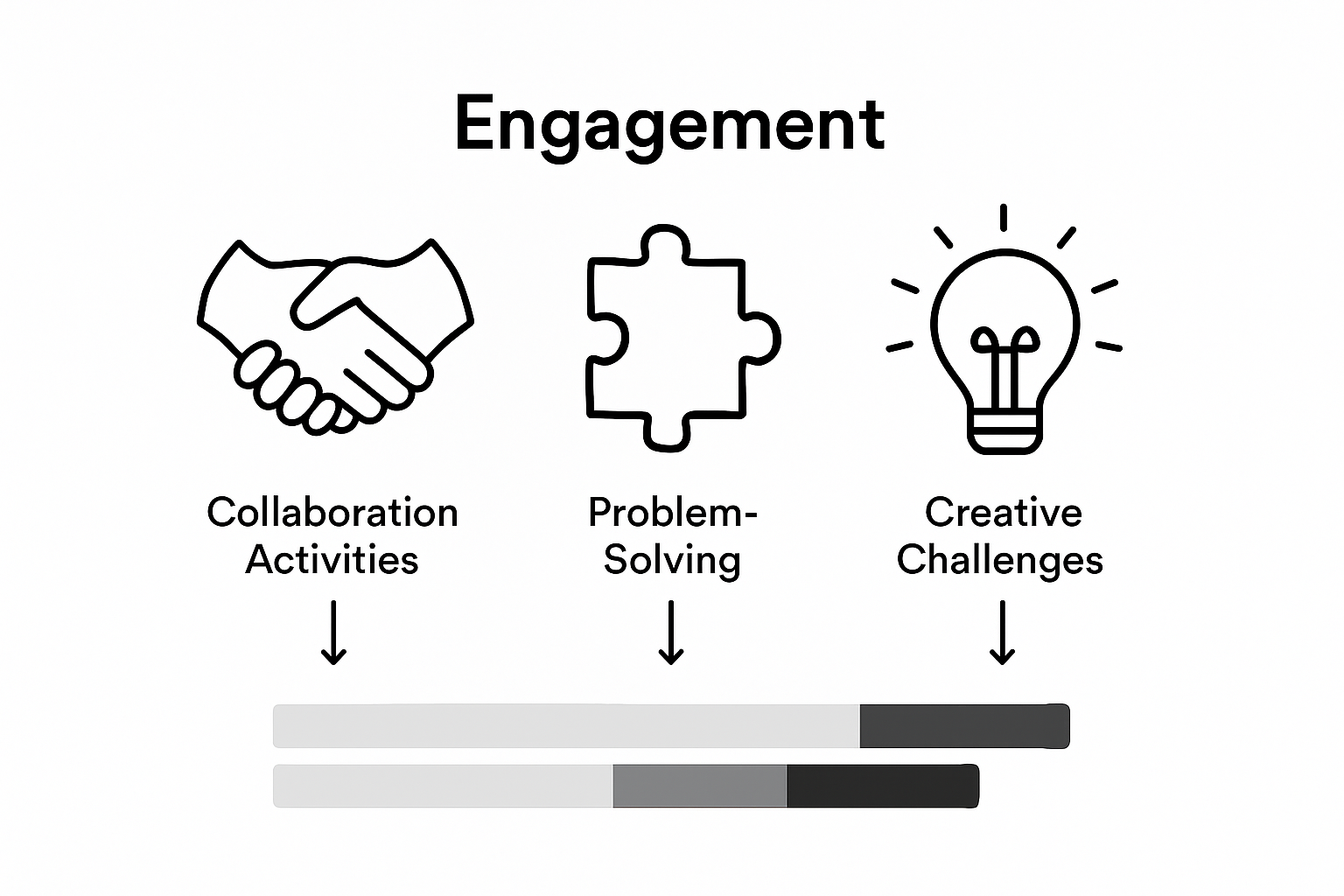
One fundamental category involves icebreaker exercises, which help group members initiate communication and begin working together effectively. These initial interactions are critical for establishing rapport and creating a comfortable environment for future collaboration. Some classic icebreaker techniques include group introductions, shared storytelling, and interactive problem-solving challenges that encourage participants to engage authentically.
Team building activities can be broadly categorized into several distinctive types:
- Problem-Solving Activities
- Escape room challenges
- Complex puzzle solving
- Strategic simulation scenarios
- Communication Enhancement
- Blindfolded navigation exercises
- Active listening workshops
- Nonverbal communication challenges
- Creative Collaboration
- Group art projects
- Improvisation workshops
- Collaborative storytelling
Modern organizations increasingly recognize that competition-based learning approaches can drive engagement and motivation during team building. By introducing elements of friendly competition, corporate team building events transform traditional training into dynamic, interactive experiences that simultaneously entertain and educate participants. The goal is not just to create momentary excitement, but to develop lasting skills that translate directly into improved workplace performance and team cohesion.
Key Benefits For Corporate Performance
Corporate performance represents a multifaceted concept that extends far beyond traditional productivity metrics. Team building emerges as a critical strategic intervention that directly impacts organizational effectiveness, transforming workplace dynamics through targeted, intentional experiences designed to unlock collective potential.

Play at work fundamentally helps employees function more effectively, offering substantial benefits that range from stress management to creativity enhancement. By creating environments that encourage collaborative interactions, organizations can trigger significant performance improvements. Serious play methods provide a sophisticated approach to integrating disparate knowledge and aligning team efforts toward complex problem-solving objectives.
The key benefits of strategic team building for corporate performance include:
- Enhanced Communication
- Breaking down interdepartmental barriers
- Improving cross-functional understanding
- Developing shared communication protocols
- Psychological Safety
- Reducing interpersonal tensions
- Creating supportive work environments
- Encouraging risk-taking and innovation
- Organizational Resilience
- Building adaptable team structures
- Developing collective problem-solving capabilities
- Increasing workforce flexibility
Modern corporations recognize that corporate event planning serves as more than a mere administrative function. It represents a strategic tool for cultivating high-performance cultures, where employees feel connected, motivated, and aligned with organizational objectives. By investing in purposeful team building, companies can transform potential workplace friction into collaborative energy, driving sustained competitive advantage through human capital development.
Planning And Executing Successful Events
Team building events require meticulous planning and strategic execution to transform potential group interactions into meaningful organizational experiences. Successful event planning goes beyond logistical coordination, demanding a sophisticated approach that integrates human dynamics, organizational objectives, and creative engagement strategies.
The Synergistic Team Composition Problem provides critical insights into team design, emphasizing the importance of carefully partitioning individuals into diverse groups that cover all required competencies. This research underscores the significance of intentional team selection, ensuring balanced performance and complementary skill sets. Innovative brainstorming techniques further enhance event effectiveness, such as encouraging idea generation while walking, which maintains mental energy and promotes equal participation.
Key strategic components for planning successful team building events include:
- Pre-Event Preparation
- Comprehensive needs assessment
- Clear objective definition
- Participant background research
- Event Design
- Tailored activity selection
- Scalable engagement methods
- Inclusive participation strategies
- Execution Considerations
- Flexible facilitation approaches
- Real-time adaptation mechanisms
- Continuous participant feedback integration
Modern organizations recognize that corporate event planning represents a sophisticated discipline requiring nuanced understanding of group dynamics, individual motivations, and organizational culture. By approaching team building as a strategic intervention rather than a mere social activity, companies can transform potential workplace interactions into powerful opportunities for collective growth, mutual understanding, and enhanced organizational performance.
Common Mistakes And How To Avoid Them
Team building initiatives often fail not from lack of intention, but from fundamental strategic misconceptions about group dynamics and organizational psychology. Understanding these potential pitfalls is crucial for designing meaningful, transformative experiences that genuinely enhance workplace collaboration.
Personality compatibility research reveals that mismatched team member characteristics can significantly undermine performance outcomes. Organizations frequently overlook the nuanced interpersonal factors that determine team success, defaulting to superficial engagement strategies that fail to address underlying group interaction complexities. Historical team development approaches demonstrate that deep self-understanding and authentic group dynamics are essential for creating truly effective team experiences.
Common team building mistakes include:
- Structural Errors
- One-size-fits-all activity selection
- Ignoring individual participant preferences
- Lack of clear performance objectives
- Engagement Failures
- Forced or inauthentic interactions
- Insufficient participant preparation
- Minimal post-event follow-up
- Design Misconceptions
- Prioritizing entertainment over learning
- Overlooking psychological safety
- Neglecting continuous improvement mechanisms
Modern organizations recognize that event management strategies require sophisticated, nuanced approaches that go beyond traditional team building paradigms. By understanding and proactively addressing potential pitfalls, companies can transform team development from a periodic exercise into a strategic, ongoing organizational capability that drives genuine performance improvement.
Elevate Your Corporate Team Building with Morocco Events
Creating effective team building experiences goes beyond simple activities. The article highlights common challenges like forced interactions and lack of clear objectives that prevent companies from unlocking true team potential. If your goal is to foster enhanced communication, build psychological safety, and boost organizational resilience you need a partner who understands these complexities and can tailor experiences accordingly.
At Morocco Events we specialize in delivering strategic corporate team building solutions in Marrakech and across Morocco. Our expert planners craft immersive events that blend creative engagement with purposeful outcomes. With our extensive network and proven expertise featured on Morocco Events: Morocco’s Premier Event and Wedding Planner we ensure every team building activity drives measurable performance improvements. Why settle for generic when you can have a customized experience designed to transform your workforce? Take the first step toward true team synergy today by exploring how our services can elevate your next corporate event.
Frequently Asked Questions
What is corporate team building?
Corporate team building is a strategic approach organizations use to enhance collaboration, communication, and collective performance among employees through engaging and meaningful interactions.
What are the key benefits of team building for corporate performance?
Team building enhances communication, fosters psychological safety, and builds organizational resilience, ultimately leading to improved collaboration and performance within the workplace.
What types of activities fall under team building?
Team building activities include icebreakers, problem-solving exercises, communication enhancement activities, and creative collaboration projects, each designed to meet specific team development goals.
How can organizations plan successful team building events?
Successful team building events require comprehensive pre-event preparation, careful activity selection tailored to objectives, and flexible execution strategies to adapt to real-time participant feedback.
Recommended
- Complete Guide to the Role of Team Building Events – Morocco Events
- 7 Essential Types of Corporate Events for Planners to Know – Morocco Events
- 7 Steps to a Successful Team Building Event Planning Checklist – Morocco Events
- Corporate Events Definition: Complete Professional Guide – Morocco Events
- Cómo coordinar proyectos creativos con éxito empresarial
- Cómo iniciar proyectos de IA para líderes empresariales – Bit2Brain
- Incorporation of Company Branding and SEO – 1on1 SEO