What Is Event Planning and Why It Matters
Over 80 percent of American organizations rely on skilled professionals to orchestrate their most important events. Whether it is launching a new tech innovation in New York or hosting a milestone wedding in San Francisco, event planning shapes how people connect and remember key moments. Understanding the core concepts and expert strategies behind successful event planning helps anyone—businesses or individuals—create experiences that truly stand out.
Table of Contents
- Defining Event Planning and Core Concepts
- Major Types of Events and Their Unique Needs
- Essential Steps in the Event Planning Process
- Key Roles and Responsibilities in Event Planning
- Challenges and Mistakes to Avoid When Planning Events
Key Takeaways
| Point | Details |
|---|---|
| Event Planning is Multifaceted | It involves strategic design, logistics, and the creation of immersive experiences tailored to diverse event types. |
| Key Roles are Essential | A successful event relies on collaboration among various specialists, including Event Directors, Coordinators, and Technical Managers. |
| Budget Management is Crucial | Meticulous financial planning and resource allocation are vital for the feasibility and success of any event. |
| Risk Management is Necessary | Anticipating challenges and developing contingency plans is essential to navigate potential pitfalls effectively. |
Defining Event Planning and Core Concepts
Event planning is a sophisticated professional discipline that transforms abstract concepts into remarkable real-world experiences. At its core, event planning represents a strategic approach to designing, organizing, and executing gatherings that range from intimate celebrations to large-scale international conferences. Event planning goes far beyond simply arranging logistics – it involves creating immersive environments that connect people, communicate messages, and deliver memorable moments.
Professional event planning is grounded in several fundamental principles that guide every decision throughout the planning and execution phases. These principles include client-centric strategic thinking, meticulous detail orientation, remarkable flexibility, and a commitment to ethical and sustainable practices. Each event represents a unique puzzle where planners must synthesize creative vision with precise operational management, ensuring every element works harmoniously to achieve the desired outcomes.
The discipline encompasses a complex ecosystem of skills that blend communication theory, project management, creative design, and interpersonal dynamics. Successful event planners must possess exceptional communication competence, demonstrating an ability to engage stakeholders dialogically while maintaining a reflective and adaptive approach. This requires navigating intricate human interactions, understanding diverse audience expectations, and crafting experiences that resonate on emotional and practical levels. Whether orchestrating a corporate conference, a destination wedding, or an international trade exhibition, event planning demands a sophisticated combination of analytical thinking, artistic creativity, and strategic execution.
Major Types of Events and Their Unique Needs
Event planning encompasses a diverse spectrum of gatherings, each with distinctive requirements, objectives, and strategic approaches. Corporate events represent a critical category that includes conferences, product launches, team-building retreats, and professional seminars. These events are meticulously designed to achieve specific business objectives, ranging from knowledge dissemination and skill development to networking and brand positioning.
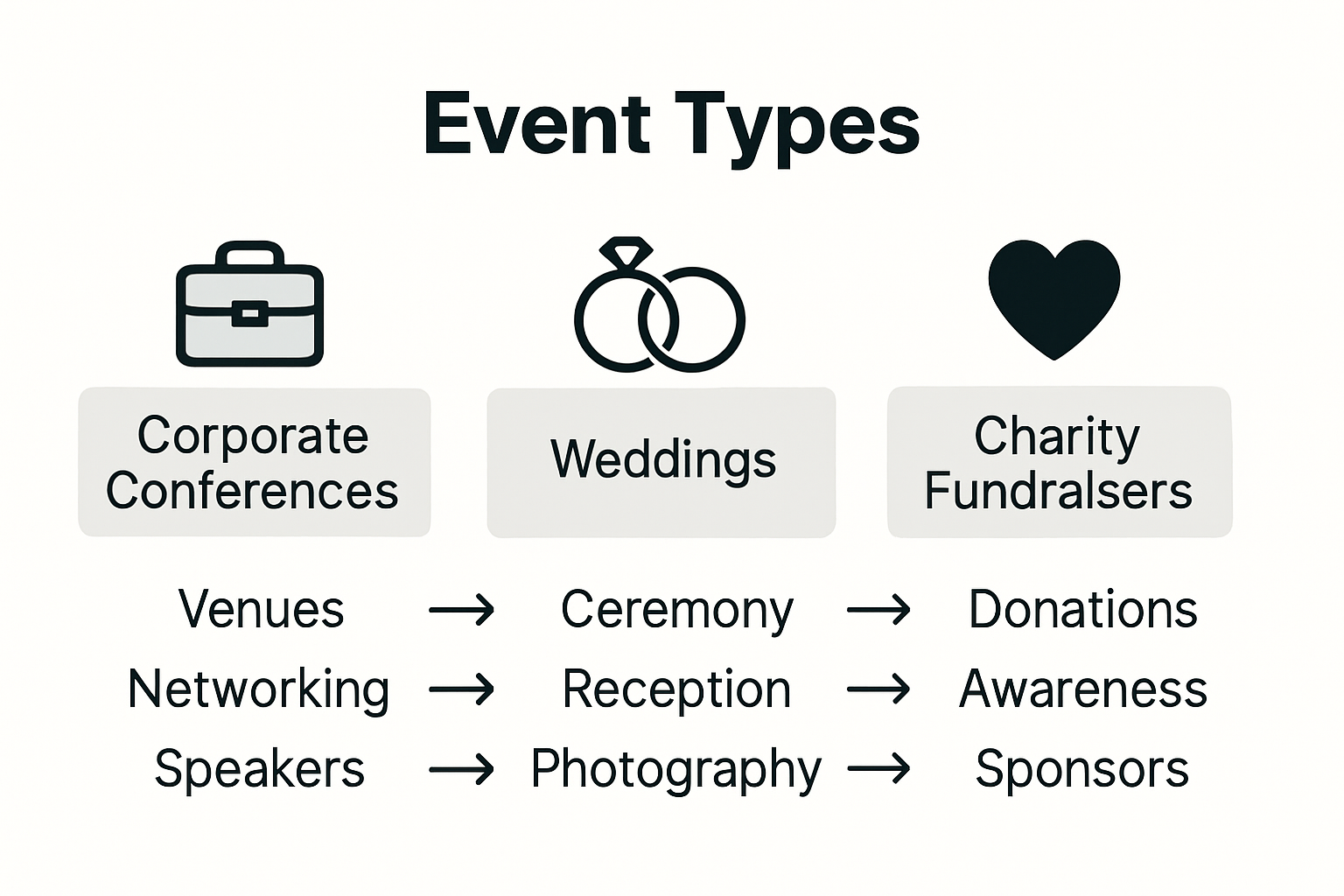
Professional event planners recognize that different event types demand specialized strategies and nuanced understanding. Scientific conferences, for instance, are structured to facilitate knowledge sharing, featuring workshops, seminars, and trade shows tailored to specific academic or industry-focused objectives. These events require intricate planning that balances technical content delivery with interactive engagement, ensuring participants gain meaningful insights and professional connections.
Beyond corporate and academic contexts, event planning spans a rich landscape of personal and social gatherings. From lavish wedding celebrations and milestone birthday parties to international cultural festivals and charity fundraisers, each event type presents unique logistical and creative challenges. Successful event planners must possess the versatility to adapt their skills across diverse scenarios, understanding the subtle differences in audience expectations, communication styles, and experiential design that transform ordinary gatherings into extraordinary experiences. Whether orchestrating an intimate networking dinner or a large-scale international exhibition, the fundamental goal remains consistent: creating memorable, purposeful interactions that resonate with participants long after the event concludes.
Essential Steps in the Event Planning Process
Event planning is a structured discipline that requires methodical approach and strategic thinking. Event planning workflow typically begins with initial conceptualization and strategic objective setting, where event professionals define the core purpose, target audience, and desired outcomes. Strategic planning serves as the critical foundation, determining the event’s direction and establishing measurable goals that will guide subsequent decision-making processes.
The next phase involves comprehensive budget management and resource allocation, a crucial step that determines the event’s feasibility and operational boundaries. Professional planners meticulously analyze financial constraints, allocate resources strategically, and develop detailed financial frameworks that balance creative vision with fiscal responsibility. This stage requires careful negotiation with vendors, venue managers, and stakeholders to maximize value while maintaining the event’s quality and integrity.
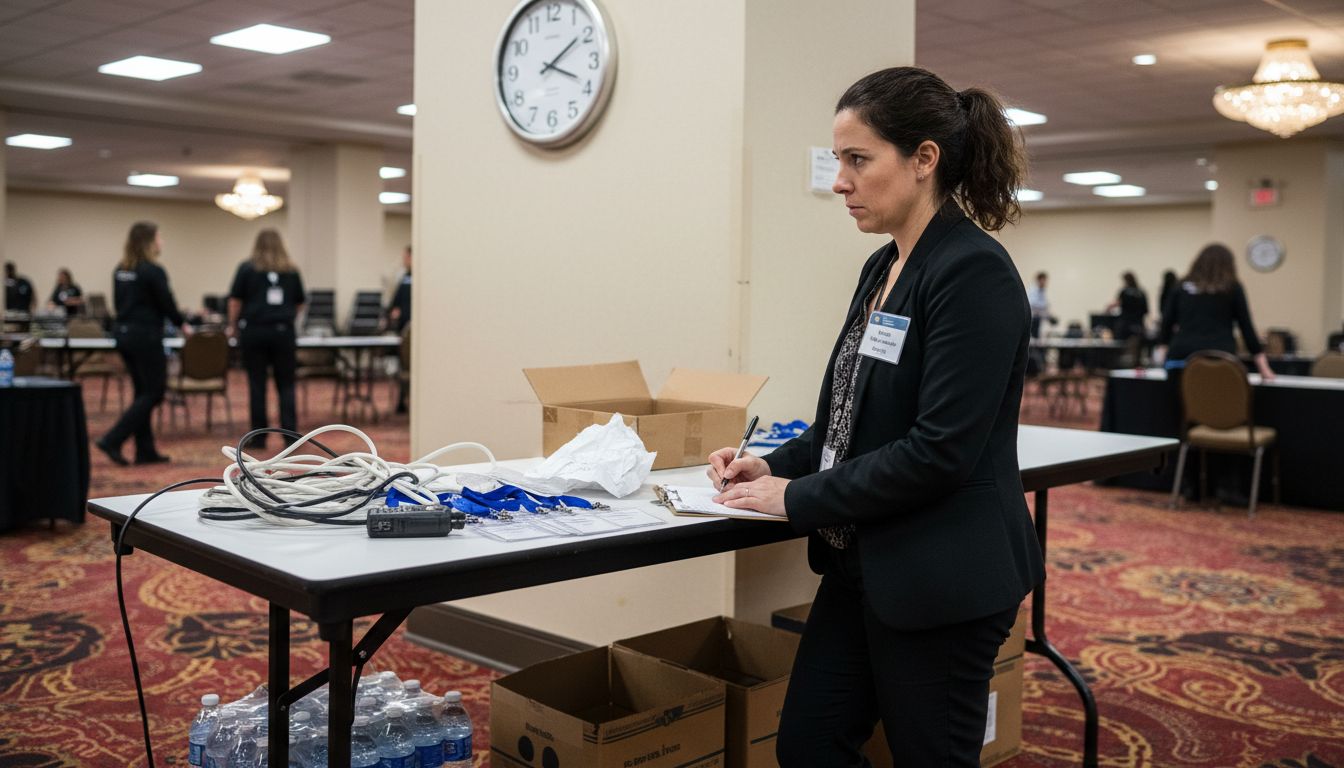
Logistical coordination represents the most complex and intricate component of the event planning process. Detailed planning encompasses multiple interconnected elements, including venue selection, technical infrastructure, transportation logistics, catering arrangements, and comprehensive contingency planning. Successful event planners develop robust risk management strategies, anticipating potential challenges and creating flexible response mechanisms that ensure smooth execution. From coordinating audiovisual equipment to managing complex scheduling requirements, this phase demands exceptional organizational skills, technological proficiency, and the ability to synchronize numerous moving parts into a cohesive, seamless experience that meets or exceeds client expectations.
Key Roles and Responsibilities in Event Planning
Event planning demands a complex ecosystem of professional roles, each contributing specialized expertise to create extraordinary experiences. Corporate event planning requires a multidisciplinary team where key professionals work in seamless coordination. At the core of this collaborative structure, the Event Director provides overarching strategic vision, setting the fundamental objectives and ensuring alignment with client expectations while managing the entire planning ecosystem.
Beneath the Event Director, specialized roles emerge with distinct responsibilities. Event Coordinators handle granular logistical details, managing vendor communications, scheduling, and operational synchronization. Creative Directors design the event’s aesthetic and experiential elements, crafting immersive environments that translate abstract concepts into tangible, memorable experiences. Meanwhile, Technical Managers ensure technological infrastructure, audiovisual integration, and systematic execution of complex event requirements.
Supporting these primary roles, additional professionals contribute critical specialized skills. Budget Managers meticulously track financial parameters, negotiate contracts, and optimize resource allocation. Marketing Specialists develop communication strategies, manage event branding, and create promotional materials that generate excitement and engagement. Logistics Coordinators navigate transportation, venue selection, and complex scheduling challenges, while Risk Management Experts develop comprehensive contingency plans to mitigate potential disruptions. This intricate professional network transforms event planning from a mere organizational task into a sophisticated, strategic discipline that delivers exceptional, seamless experiences.
Challenges and Mistakes to Avoid When Planning Events
Event planning requires navigating a complex landscape of potential pitfalls that can derail even the most meticulously designed experiences. Event logistics management demands proactive strategies to mitigate risks and prevent common operational breakdowns. Communication failures represent one of the most critical challenges, where misaligned expectations between event planners, clients, vendors, and stakeholders can create cascading complications that compromise the entire event’s success.
Professional event planners must develop robust strategies to ensure synchronized activities and maintain high standards of professional conduct. Budgetary mismanagement frequently emerges as a significant risk, with unexpected expenses and inadequate financial planning potentially destroying an event’s feasibility. Critical mistakes often include underestimating contingency requirements, failing to negotiate comprehensive vendor contracts, and not maintaining transparent financial tracking mechanisms that provide real-time insights into spending patterns.
Technological and operational challenges demand sophisticated risk management approaches. Potential pitfalls include insufficient technical infrastructure preparation, inadequate backup systems, poor venue selection, and ineffective team coordination. Successful event professionals anticipate potential disruptions by developing comprehensive contingency plans, maintaining flexible communication channels, and building redundant systems that can adapt quickly to unexpected challenges. The most advanced event planners recognize that risk management is not about eliminating all potential problems, but creating resilient frameworks that can smoothly navigate and resolve issues as they emerge, transforming potential obstacles into opportunities for exceptional problem solving.
Elevate Your Event Planning Experience with MoroccoEvents
Understanding the complexities of event planning is vital for crafting unforgettable experiences. Whether you face challenges in budget management, logistics coordination, or designing immersive environments, expert support can turn your vision into reality. The article highlights the importance of strategic planning, client-centric approaches, and risk management—areas where professional guidance can make a decisive difference.
At Morocco Events: Morocco’s Premier Event and Wedding Planner, we specialize in delivering tailored event solutions across Morocco, especially in Marrakech. Our team combines creativity with meticulous organization to overcome common pitfalls like communication breakdowns and logistical hurdles. Partner with us to access a trusted network of vendors, innovative technologies, and multilingual expertise that ensures every detail aligns with your goals.
Ready to transform your next gathering into an extraordinary occasion? Discover comprehensive services that blend traditional Moroccan aesthetics with modern trends at MoroccoEvents.com. Take the next step towards seamless event success by connecting with our dedicated professionals today.
Frequently Asked Questions
What is the role of an event planner?
An event planner is responsible for designing, organizing, and executing events, ensuring that every element aligns with the client’s vision and objectives while managing logistics and vendors.
What are the essential steps in the event planning process?
The essential steps include conceptualization, strategic objective setting, budget management, logistical coordination, and risk management to ensure a seamless execution of the event.
What types of events require specialized planning approaches?
Different types of events such as corporate conferences, weddings, trade exhibitions, and charity fundraisers demand specialized strategies and an understanding of unique audience expectations and logistical challenges.
What are common challenges faced in event planning?
Common challenges include communication failures, budget mismanagement, technological issues, and operational breakdowns, which require proactive strategies and risk management plans to resolve.