Event Management Explained: Complete Professional Guide
Over five million events take place annually in the United States, making event management a major force in american business and culture. Every gathering, from lively festivals to high-stakes corporate conferences, depends on professionals who turn complex ideas into seamless, memorable experiences. Understanding the core concepts and specialized skills behind event management can help anyone see why this field is critical for connecting people and achieving bold goals.
Table of Contents
- Defining Event Management And Core Concepts
- Types Of Events And Industry Segments
- Essential Event Management Processes
- Roles And Responsibilities Of Event Managers
- Costs, Risks, And Success Factors
Key Takeaways
| Point | Details |
|---|---|
| Event Management as a Discipline | Event management requires strategic planning, organizing, and executing diverse gatherings while integrating logistics with human experience design. |
| Diverse Event Segments | The field encompasses various types of events, including corporate, educational, and cultural, each with unique objectives and characteristics. |
| Key Processes | Successful event management involves interconnected stages, including goal setting, detailed planning, execution, and post-event evaluation to ensure impactful experiences. |
| Financial Management and Success Factors | Effective budgeting and risk assessment are crucial for event success, requiring a balance between financial prudence and creative vision. |
Defining Event Management and Core Concepts
Event management is a sophisticated professional discipline that involves strategically planning, organizing, executing, and evaluating complex gatherings across various contexts. According to Taylor Francis, event management encompasses a comprehensive approach to creating purposeful experiences that connect people, organizations, and objectives.
Event management represents a multifaceted field requiring specialized skills in coordination, communication, creative problem solving, and strategic thinking. Professionals in this domain must masterfully integrate technical logistics with human experience design. Key responsibilities include:
- Conceptualizing event objectives
- Developing detailed project plans
- Managing complex stakeholder relationships
- Coordinating intricate operational requirements
- Ensuring seamless execution across multiple domains
At its core, event management transforms abstract ideas into memorable, impactful experiences. Sage Publications highlights that modern event management extends far beyond mere logistics, representing a critical intersection of social, cultural, and economic interactions. Successful event managers must understand the nuanced dynamics of human connection, technological integration, and strategic communication to craft experiences that resonate deeply with participants and achieve organizational goals.
The discipline demands a holistic perspective, blending technical precision with creative vision. Whether orchestrating a corporate conference, a wedding celebration, or an international product launch, event management professionals serve as architects of experience – carefully designing environments that facilitate meaningful interactions, drive engagement, and create lasting impressions.
Types of Events and Industry Segments
Event management encompasses a wide spectrum of specialized segments, each with unique characteristics and strategic objectives. ETD Research provides a comprehensive framework categorizing events into eight distinct segments: arts and entertainment, educational, recreational, business and trade, sport, political, private, and cultural.
Corporate Events represent a significant and dynamic segment within the event management landscape. Wikipedia defines these as private gatherings organized by corporations for multiple purposes, including:
- Staff recognition and motivation
- Client relationship building
- Strategic team development
- Product launches and announcements
- Stakeholder engagement
- Internal training and conferences
Beyond corporate contexts, event segments reflect the diverse ways organizations and individuals create meaningful shared experiences. Arts and entertainment events might include music festivals, theater productions, and cultural performances. Educational events range from academic conferences to professional workshops, while sporting events encompass everything from local tournaments to international championships.
The complexity of modern event management requires professionals to understand the nuanced objectives of each event segment. Whether designing a multinational conference, planning a community festival, or coordinating a political rally, event managers must adapt their strategic approach to meet specific audience expectations, logistical requirements, and desired outcomes. This versatility transforms event management from a technical discipline into a sophisticated art of human connection and experience design.
Essential Event Management Processes
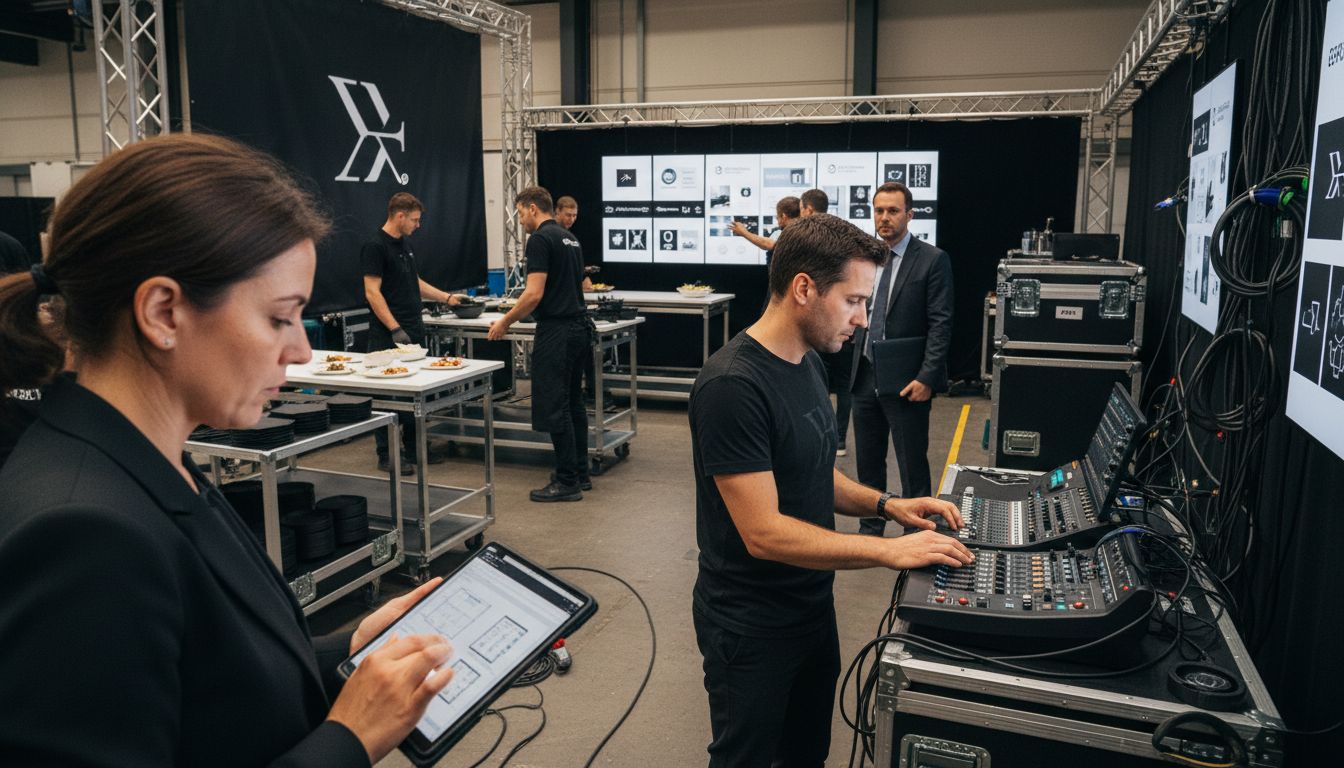
Event Logistics Explained: Complete Guide for Planners reveals that successful event management requires a systematic approach combining strategic planning and meticulous execution. AFF4 Research highlights the critical initial phase of defining an event’s core purpose, objectives, and scope – a foundational step that guides all subsequent planning decisions.
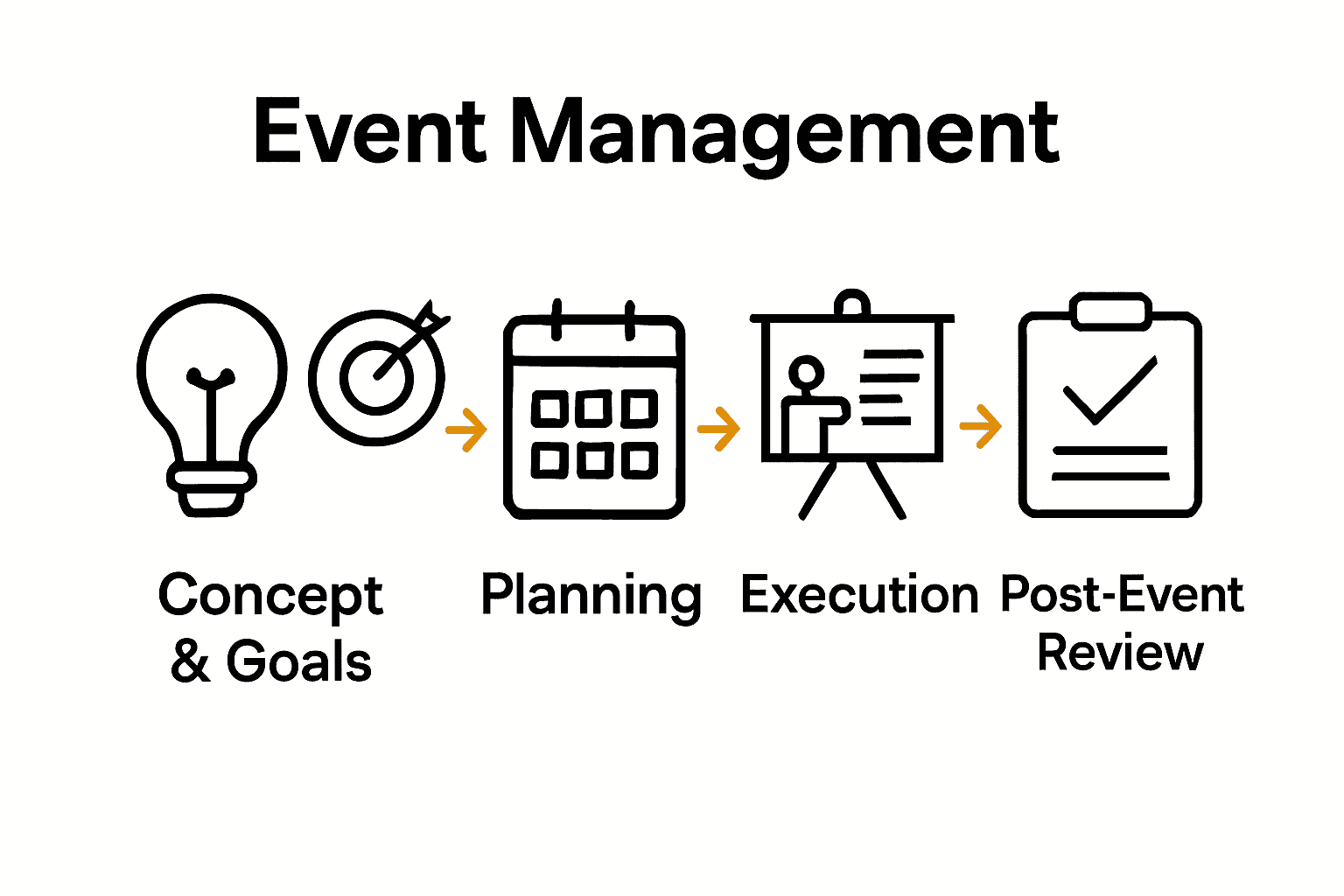
The event management process typically encompasses several interconnected stages:
- Conceptualization and Goal Setting
- Detailed Project Planning
- Vendor and Resource Coordination
- Risk Assessment and Mitigation
- Budget Management
- Execution and Real-Time Management
- Post-Event Evaluation
Sage Publications emphasizes that modern event management goes beyond traditional logistics, integrating complex considerations such as financial planning, legal compliance, marketing strategies, and sustainability practices. Professionals must navigate intricate stakeholder expectations while maintaining flexibility to adapt to unexpected challenges.
Each event management process requires a unique blend of technical skill and creative problem solving. From corporate conferences to cultural festivals, successful event managers must synthesize strategic thinking, detailed operational planning, and human-centered design to transform abstract concepts into memorable, impactful experiences that achieve specific organizational objectives.
Roles and Responsibilities of Event Managers
The Essential Guide to the Role of Event Planner illuminates the complex landscape of event management responsibilities. Taylor Francis provides a comprehensive overview of event managers’ multifaceted roles, emphasizing their critical function in overseeing every aspect of event production from initial concept to final execution.
The event manager’s responsibilities encompass a wide range of strategic and tactical duties:
- Comprehensive event conceptualization
- Client requirement analysis
- Detailed budget development and management
- Vendor selection and coordination
- Venue sourcing and logistics planning
- Risk assessment and contingency planning
- Marketing and promotional strategy development
- Technical and creative production management
- Post-event evaluation and reporting
Sage Publications highlights that successful event managers must blend analytical precision with creative problem solving. They are simultaneously project managers, creative directors, financial strategists, and communication experts who transform complex organizational objectives into memorable, impactful experiences.
Beyond technical skills, exceptional event managers possess extraordinary interpersonal capabilities. They must navigate intricate stakeholder relationships, communicate effectively across diverse teams, manage high-pressure environments, and maintain composure while orchestrating complex logistical challenges. Their role extends far beyond traditional management, representing a unique fusion of strategic thinking, creative vision, and operational excellence.
Costs, Risks, and Success Factors
Event Logistics Explained: Complete Guide for Planners underscores the critical importance of strategic financial planning. UK Sage Publications provides comprehensive insights into financial management, highlighting the complex interplay between budgeting, risk assessment, and overall event success.
Financial Management in event planning involves multiple critical components:
- Comprehensive budget development
- Precise expense tracking
- Revenue projection and analysis
- Contingency fund allocation
- Cost optimization strategies
- Financial risk mitigation
- Transparent financial reporting
AFF4 Research emphasizes that successful event budgeting goes beyond simple expense calculation. Event professionals must develop nuanced financial strategies that account for potential variables, unexpected costs, and potential revenue streams while maintaining financial flexibility and risk management.
Ultimately, success in event management depends on a delicate balance between financial prudence and creative vision. Managers must simultaneously manage fiscal constraints, navigate complex risk landscapes, and deliver exceptional experiences that meet or exceed stakeholder expectations. This requires a sophisticated approach that combines analytical rigor with strategic imagination, transforming financial challenges into opportunities for innovation and value creation.
Elevate Your Event Management Experience with MoroccoEvents
Understanding the complexity of event management with its detailed planning, risk assessment, and creative execution can feel overwhelming. From defining clear event objectives to orchestrating seamless logistics, the challenge lies in balancing technical precision with unforgettable participant experience. If you are striving to create impactful corporate events, cultural festivals, or luxury weddings that resonate deeply and meet every goal, tackling these pain points requires expert guidance.
At Morocco Events: Morocco’s Premier Event and Wedding Planner, we specialize in transforming your vision into reality through comprehensive event management solutions. Our team offers customized services including venue sourcing, vendor coordination, creative branding, and real-time event management tailored to Moroccan venues like Marrakech. We understand that every event’s success depends on flawless execution combined with a creative personal touch. Visit MoroccoEvents.com today to explore how our trusted expertise, innovative approach, and multilingual capabilities can simplify your planning challenges and create a truly memorable occasion. Begin your journey to an expertly managed event now.
Frequently Asked Questions
What is event management?
Event management is the strategic planning, organizing, executing, and evaluating of gatherings for various purposes, involving skills such as coordination, communication, and creative problem solving.
What are the key responsibilities of an event manager?
Key responsibilities include conceptualizing event objectives, project planning, managing stakeholder relationships, coordinating operational needs, and ensuring the seamless execution of events.
What types of events fall under event management?
Event management covers a diverse range of event types including corporate events, arts and entertainment events, educational workshops, sports competitions, and cultural festivals, each with unique objectives and characteristics.
How do financial management and risk assessment factor into event management?
Financial management includes budget development, expense tracking, and revenue projections, while risk assessment involves identifying potential challenges and developing contingency plans to ensure successful event execution.