The Essential Guide to the Role of Event Planner
Most people underestimate just how many moving pieces an event planner juggles at once. From brainstorming creative concepts to managing a web of vendors and guests, these professionals turn ideas into flawless experiences every day. Over 80 percent of successful events are guided by expert planners who know how to anticipate challenges and keep things on track. Discover what makes this demanding role so vital and what skills set great event planners apart.
Table of Contents
- Defining The Role Of Event Planner
- Types Of Events Managed By Planners
- Core Responsibilities And Key Skills
- Vendor Coordination And Client Relations
- Common Challenges And How To Avoid Them
Key Takeaways
| Point | Details |
|---|---|
| Role of Event Planner | Event planners are responsible for designing, coordinating, and executing a wide range of events, ensuring every detail contributes to overall success. |
| Core Responsibilities | Their key tasks include client consultations, logistical management, budget oversight, and vendor coordination, requiring both creative and organizational skills. |
| Adaptability and Problem-Solving | Successful event planners must be adaptable and proactive, equipped to handle unexpected challenges while maintaining clear communication with clients and vendors. |
| Continuous Learning | Mastery in event planning demands continuous learning and the ability to navigate diverse event types, integrating unique strategies for effective execution. |
Defining the Role of Event Planner
An event planner is a professional responsible for conceptualizing, designing, and executing comprehensive event experiences across various contexts. According to UC Berkeley School of Information, these professionals manage large-scale events encompassing conception, design, development, coordination, implementation, and post-event evaluation.
The scope of an event planner’s responsibilities is remarkably broad and dynamic. As detailed by California State University, event planners coordinate diverse gatherings including:
- Meetings and conferences
- Professional seminars
- Trade shows and conventions
- Fundraising events
- Corporate celebrations
- Community gatherings
Their core responsibilities involve intricate logistical management, which includes critical elements such as:
- Theme development
- Program design
- Venue selection
- Décor coordination
- Vendor management
- Budget oversight
Successful event planners must blend creative vision with meticulous organizational skills. They act as strategic architects who transform conceptual ideas into memorable, well-executed experiences. Whether orchestrating an intimate corporate workshop or a large international conference, these professionals ensure every detail contributes to the event’s overall success.
In the world of professional event planning, adaptability is key. Event Planning Checklist for Morocco highlights that planners must be prepared to navigate unexpected challenges while maintaining a seamless, professional approach. Their ability to anticipate potential issues, develop contingency plans, and provide smooth execution distinguishes exceptional event planners from average coordinators.
Types of Events Managed by Planners
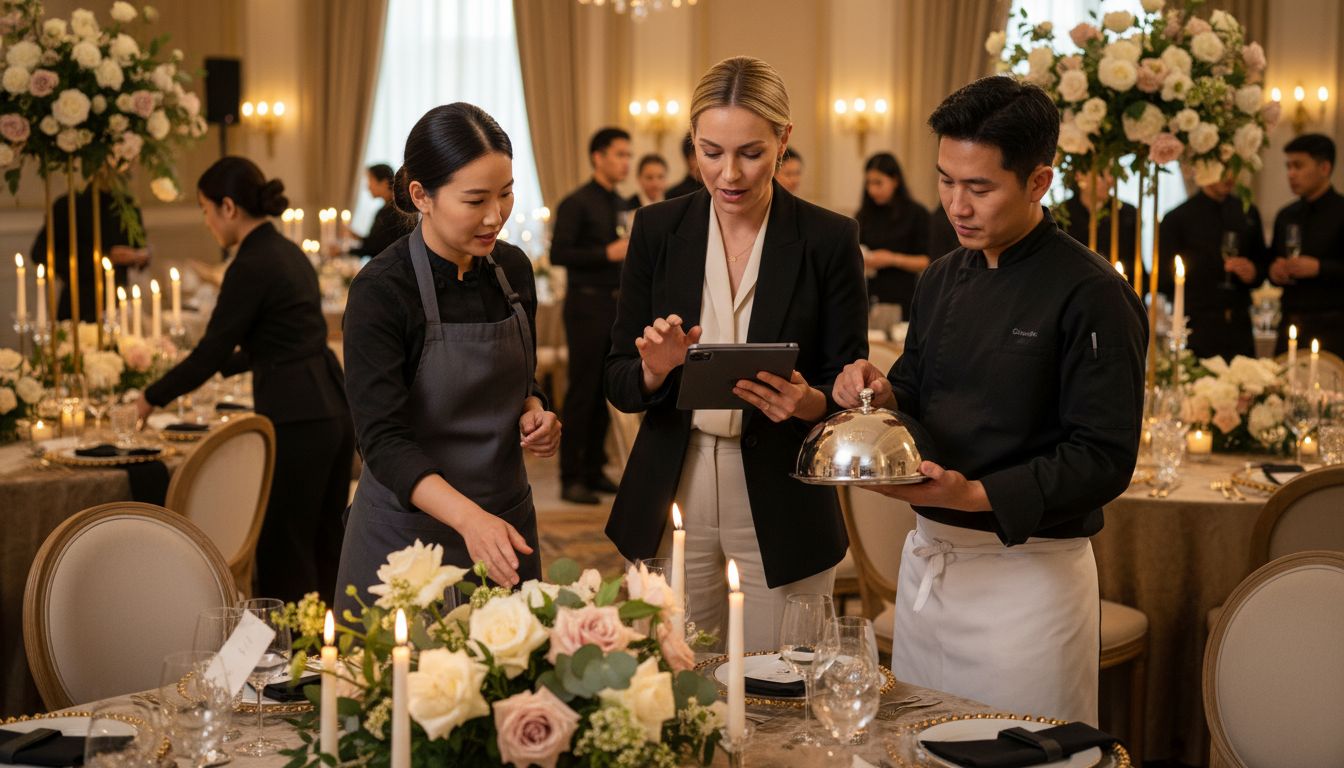
Event planners are versatile professionals who manage an incredibly diverse range of events across multiple sectors. According to Wikipedia, event management encompasses planning and coordinating complex gatherings that span multiple categories, including:
- Festivals: Large-scale public celebrations
- Conferences: Professional and academic meetings
- Ceremonies: Formal and ritualistic gatherings
- Weddings: Personal milestone celebrations
- Formal parties: Structured social events
- Concerts: Musical performances
- Conventions: Industry or community-focused meetings
The complexity of event planning extends far beyond simple coordination. As detailed by Wikipedia’s Corporate Entertainment entry, corporate events represent a significant segment of professional event management. These events can range from massive conventions with hundreds of attendees to intimate gatherings like:
- Team-building retreats
- Holiday parties
- Award ceremonies
- Client appreciation events
- Stakeholder meetings
- Product launch presentations
Successful event planners must master intricate logistics that include critical components such as:
- Budgeting and financial planning
- Site and venue selection
- Permit acquisition
- Transportation and parking coordination
- Speaker and entertainer arrangements
- Decor design
- Security management
- Catering coordination
- Third-party vendor negotiations
- Emergency contingency planning
For professionals seeking to specialize, understanding the nuanced requirements of different event types is crucial. Sports Event Management Guide highlights that each event category demands unique skills and strategic approaches, making continuous learning and adaptability essential for event planning success.
Core Responsibilities and Key Skills
Event planners are multifaceted professionals whose success hinges on a complex blend of strategic planning, interpersonal skills, and technical expertise. According to Teal HQ, their core responsibilities encompass a comprehensive range of critical tasks from initial client consultation to final event evaluation.
Key Responsibilities include:
- Conducting initial client consultations
- Developing innovative event concepts and themes
- Creating detailed, professional event proposals
- Securing and booking appropriate venues
- Coordinating with multiple vendors
- Managing intricate event logistics
- Implementing precise event timelines
- Handling unexpected challenges and contingencies
- Collaborating with marketing and support teams
- Ensuring regulatory compliance
- Performing thorough post-event evaluations
The skill set required for successful event planning is equally comprehensive. Professionals must demonstrate:
- Strategic Planning: Ability to conceptualize and execute complex event designs
- Communication: Clear, persuasive interaction with clients, vendors, and stakeholders
- Problem-Solving: Quick, creative resolution of unexpected challenges
- Budget Management: Precise financial tracking and resource allocation
- Technological Proficiency: Using event management software and digital tools
- Negotiation Skills: Securing optimal contracts and vendor agreements
- Attention to Detail: Ensuring every aspect of the event meets high standards
Navigating the dynamic world of event planning requires continuous learning and adaptability. Corporate Event Terminology Guide emphasizes that successful event planners must remain flexible, innovative, and committed to delivering exceptional experiences that exceed client expectations.
Vendor Coordination and Client Relations
Successful event planning is fundamentally about building and maintaining robust relationships with both clients and vendors. According to UC Berkeley Law, event planners must engage in comprehensive consultation processes that involve conceptualizing events, developing detailed planning timelines, and creating strategic marketing approaches.
Client Relationship Management involves several critical stages:
- Initial concept consultation
- Detailed event vision exploration
- Transparent budget discussions
- Regular progress communication
- Expectation management
- Responsive problem-solving
- Final event review and feedback
Vendor Coordination requires a strategic approach that includes:
- Comprehensive vendor research
- Detailed service capability assessment
- Competitive pricing negotiations
- Contract management
- Performance monitoring
- Relationship building and networking
- Conflict resolution skills
The art of vendor coordination demands exceptional interpersonal skills and strategic thinking. Successful event planners must function as diplomatic mediators, balancing client expectations with vendor capabilities while maintaining professional relationships and delivering exceptional results.
Why Hire Birthday Event Planner highlights that professional event planners bring critical expertise in transforming complex logistical challenges into seamless, memorable experiences by leveraging their extensive professional networks and deep understanding of client and vendor dynamics.
Common Challenges and How to Avoid Them
Event planning is a dynamic profession fraught with potential obstacles that can derail even the most meticulously planned events. According to EdMates, event planners consistently face challenges that require strategic problem-solving and proactive management.
Major Challenges in event planning include:
- Budget management constraints
- Vendor coordination complexities
- Guest satisfaction unpredictability
- Unexpected logistical issues
- Time management pressures
- Communication breakdowns
- Technical equipment failures
Proactive Mitigation Strategies:
- Develop comprehensive contingency plans
- Maintain detailed budget tracking
- Establish clear communication protocols
- Create flexible scheduling buffers
- Build strong vendor relationships
- Conduct thorough risk assessments
- Implement robust backup systems
As noted by Adzuna, successful event planners must excel at troubleshooting challenges and maintaining creative problem-solving approaches throughout the event lifecycle. This requires a combination of strategic thinking, emotional intelligence, and technical expertise.
Corporate Event Terminology Guide emphasizes that the most successful event planners view challenges not as obstacles, but as opportunities to demonstrate professional adaptability and innovative thinking.
Discover Expert Event Planning Solutions for Your Next Big Occasion
Planning an event comes with many challenges highlighted in “The Essential Guide to the Role of Event Planner.” From managing complex logistics and vendor coordination to keeping budgets on track and ensuring guest satisfaction, these pain points can overwhelm even the most dedicated individuals. You want your event to stand out with flawless execution and creative design while navigating unforeseen hurdles with ease. Key terms like contingency planning, client consultation, and vendor negotiation show just how multifaceted this role truly is.
At MoroccoEvents: Morocco’s Premier Event and Wedding Planner, we specialize in transforming these challenges into seamless and memorable experiences. Our team combines deep local expertise in Moroccan venues and vendors with innovative event management techniques. Whether you are organizing a corporate conference, a luxury wedding, or a specialized sports event, we provide tailored solutions that blend traditional Moroccan aesthetics with modern trends. Our strong reputation with global partners and multilingual capabilities guarantee a trusted event partner who delivers exceptional value.
Are you ready to bring your vision to life without the stress of complex coordination? Explore comprehensive services and creative branding strategies at MoroccoEvents.com today. Contact us now to initiate your personalized event plan and experience professional excellence from concept to completion.
Frequently Asked Questions
What are the main responsibilities of an event planner?
Event planners are responsible for conceptualizing, designing, and executing events. Their main duties include client consultations, budget management, vendor coordination, venue selection, theme development, and overseeing logistics from start to finish.
What types of events do event planners typically manage?
Event planners manage a wide range of events, including meetings, conferences, weddings, corporate celebrations, trade shows, festivals, and formal parties. Each type of event requires unique skills and approaches for successful execution.
How do event planners handle unexpected challenges during an event?
Successful event planners anticipate potential issues by developing contingency plans and maintaining clear communication with clients and vendors. They use problem-solving skills to address challenges quickly and effectively, ensuring the event runs smoothly.
What skills are essential for a successful event planner?
Key skills for event planners include strategic planning, communication, problem-solving, budget management, technological proficiency, negotiation, and attention to detail. These skills help planners create memorable experiences while managing complex logistics.

Recommended
- Corporate Event Terminology: The Complete Guide – Morocco Events
- Why Hire Birthday Event Planner: Complete Guide – Morocco Events
- 7 Essential Steps for an Event Planning Checklist Morocco – Morocco Events
- What Is Sports Event Management? Complete Guide – Morocco Events
- Success Exhibiting at IFEMA Madrid: The Ultimate Exhibitor Guide
- Event Signage: Everything You Need to Know – LIVE DISPLAYS