Multilingual Event Management: Elevating Global Events
Every American event planner knows that success in global destinations like Marrakech depends on more than stylish venues and flawless logistics. With over 80 percent of international attendees rating multilingual communication as a top priority, meeting this need can set your high-profile event apart. Discover how premium multilingual event management transforms international gatherings into seamless experiences, ensuring each guest—no matter their language—feels fully included and understood.
Table of Contents
- What Is Multilingual Event Management
- Key Types Of Multilingual Events
- Essential Roles And Language Services
- Best Practices For Seamless Communication
- Common Obstacles And Smart Solutions
Key Takeaways
| Point | Details |
|---|---|
| Multilingual Event Management Enhances Communication | It enables organizations to effectively engage a global audience through advanced language integration strategies. |
| Emphasis on Cultural Sensitivity | Understanding cultural nuances is crucial to avoid miscommunication and foster meaningful connections. |
| Technological Infrastructure is Key | Invest in advanced translation tools and platforms to facilitate seamless multilingual communication during events. |
| Professional Expertise is Essential | Hire specialized multilingual coordinators and language service professionals to ensure effective communication across diverse audiences. |
What Is Multilingual Event Management
Multilingual event management represents a sophisticated approach to global event coordination that transcends traditional language barriers. At its core, this specialized discipline ensures comprehensive communication strategies across different linguistic contexts, enabling seamless international interactions. Multilingual event experiences go far beyond simple translation, integrating language services throughout the entire event lifecycle.
This comprehensive approach involves multiple strategic components, including real-time interpretation, localized content creation, culturally sensitive communication design, and adaptive messaging frameworks. Professional multilingual event managers must understand not just language translations, but nuanced cultural communication patterns, technological integration requirements, and audience engagement strategies across diverse global contexts.
Key elements of multilingual event management include simultaneous interpretation services, multilingual digital platforms, culturally adaptive presentation materials, and seamless communication technologies that support international participant experiences. These sophisticated strategies help organizations create inclusive, accessible events that resonate with global audiences, breaking down linguistic barriers and fostering meaningful cross-cultural connections.
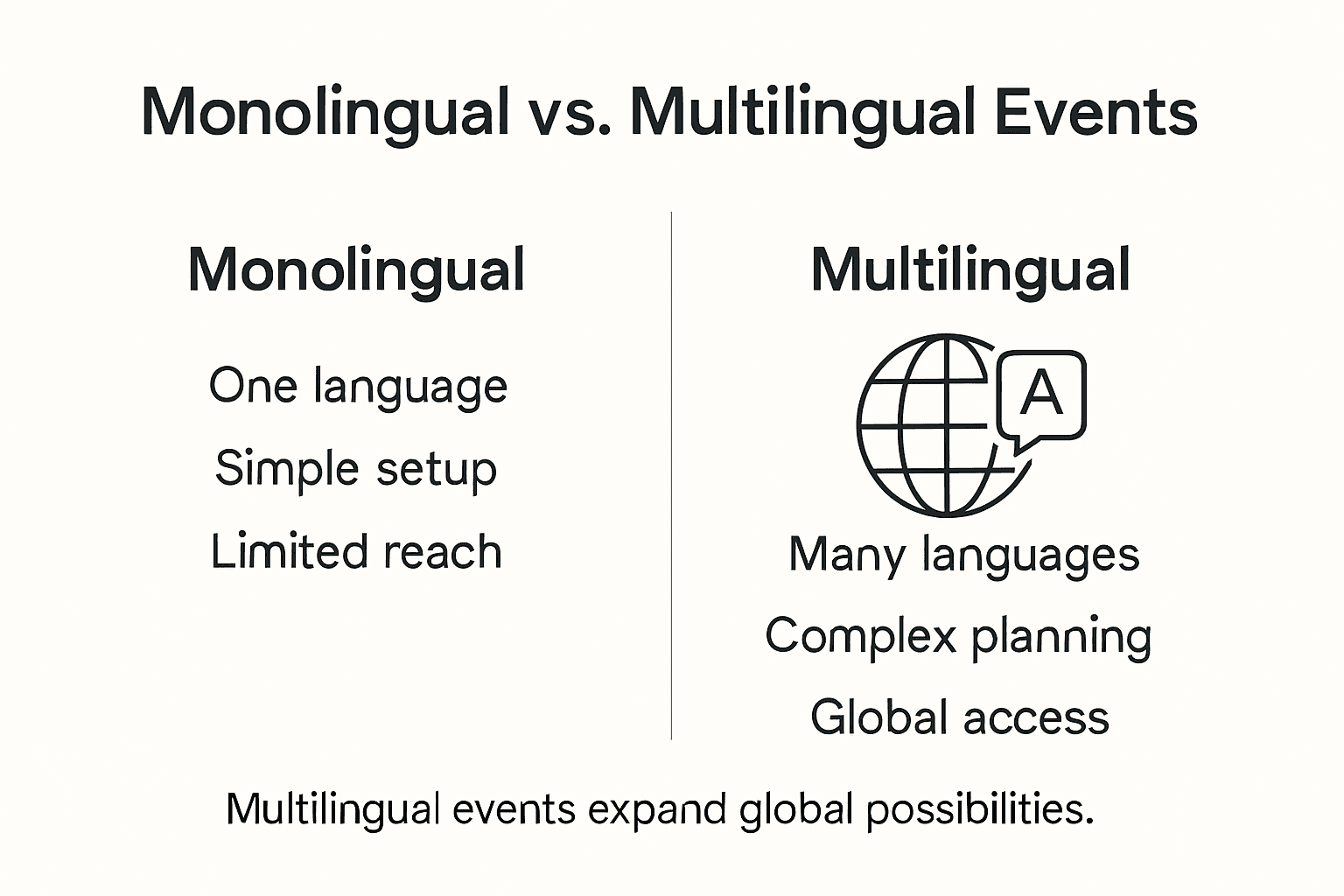
Compare traditional monolingual events with multilingual event management:
| Aspect | Monolingual Events | Multilingual Event Management |
|---|---|---|
| Audience Reach | Limited to one language | Includes global participants |
| Communication | Single-language materials | Adaptive, multi-language content |
| Technology Use | Basic presentation tools | Advanced translation platforms |
| Cultural Relevancy | One context addressed | Multiple cultures considered |
Pro Tip: Invest in professional multilingual event coordinators who understand both linguistic nuances and technological integration to ensure smooth, culturally sensitive global event experiences.
Key Types Of Multilingual Events
Multilingual events represent a diverse landscape of global communication platforms, encompassing numerous professional and cultural gatherings that require sophisticated language integration strategies. Key multilingual event categories span an extensive range from intimate professional meetings to massive international conferences, each demanding unique linguistic approaches to ensure effective cross-cultural communication.
The most prominent types of multilingual events include international corporate conferences, which bring together professionals from diverse linguistic backgrounds. Global sporting events represent another critical category, where real-time interpretation and multilingual communication are essential for creating inclusive experiences. Cultural festivals also emerge as significant multilingual event formats, celebrating international diversity while navigating complex language requirements.

Digital and hybrid event formats have dramatically expanded multilingual event possibilities, allowing organizations to create global communication platforms that transcend traditional geographic and linguistic limitations. These modern event types include online international seminars, webinars with simultaneous translation, virtual trade shows, and interactive digital conferences that seamlessly integrate multilingual communication technologies.
Pro Tip: Prioritize technological infrastructure and professional interpretation services when planning multilingual events to ensure smooth, inclusive communication across diverse linguistic audiences.
Essential Roles And Language Services
Multilingual event management requires a complex ecosystem of specialized professionals who ensure seamless communication across linguistic boundaries. Language service professionals play critical roles throughout the entire event lifecycle, from initial planning to post-event engagement, addressing the intricate communication needs of global audiences.
Key roles in multilingual event services include simultaneous interpreters who provide real-time translation during conferences and presentations, ensuring that participants can understand content regardless of their native language. Cultural consultants serve as crucial mediators, helping teams navigate nuanced communication strategies, avoiding potential misunderstandings, and ensuring that messaging resonates appropriately across different cultural contexts. Translation specialists work behind the scenes, adapting marketing materials, presentation slides, digital content, and participant documentation to maintain linguistic accuracy and cultural sensitivity.
Technology specialists form another essential component of multilingual event services, implementing sophisticated communication platforms that support multiple languages simultaneously. These professionals develop digital infrastructures that enable seamless interpretation, provide real-time translation technologies, manage multilingual communication tools, and create integrated systems that support complex linguistic requirements. Their expertise ensures that digital and hybrid events can effectively bridge language barriers, creating inclusive environments that welcome participants from diverse linguistic backgrounds.
Here’s a summary of key roles in multilingual event management and their impact:
| Role | Main Responsibility | Business Impact |
|---|---|---|
| Simultaneous Interpreter | Real-time oral translation | Enables global participation |
| Cultural Consultant | Guides on cultural nuances | Prevents miscommunication |
| Translation Specialist | Adapts written event materials | Ensures message accuracy |
| Technology Specialist | Implements multilingual platforms | Streamlines digital interaction |
Pro Tip: Invest in a comprehensive language service team with diverse linguistic capabilities and technological expertise to create truly inclusive and effective multilingual event experiences.
Best Practices For Seamless Communication
Multilingual communication requires strategic, holistic planning that goes far beyond simple translation. End-to-end language experience strategies demand comprehensive mapping of communication touchpoints, ensuring consistent messaging across diverse linguistic landscapes and creating truly immersive global experiences.
Effective multilingual communication practices involve several critical components. First, event organizers must develop thorough language mapping strategies that anticipate potential communication challenges before they arise. This includes creating detailed communication protocols that cover every interaction point, from pre-event marketing materials to live presentations and post-event follow-up communications. Cultural nuance assessment becomes crucial, requiring deep understanding of linguistic subtleties, non-verbal communication patterns, and contextual communication expectations across different regions and professional contexts.
Technology plays a transformative role in modern multilingual communication strategies. Advanced interpretation platforms, real-time translation technologies, and AI-powered communication tools enable seamless language integration, breaking down traditional communication barriers. Sophisticated digital infrastructures now support simultaneous interpretation, provide adaptive content rendering, and create dynamic communication environments that can instantly adjust to participants’ linguistic preferences. These technological solutions not only facilitate understanding but also create more inclusive, engaging event experiences that respect linguistic diversity.
Pro Tip: Develop a comprehensive multilingual communication blueprint that integrates technological solutions, cultural insights, and strategic language mapping to create truly inclusive global event experiences.
Common Obstacles And Smart Solutions
Multilingual event management presents a complex landscape of communication challenges that require strategic and innovative approaches. Comprehensive end-to-end language strategies are essential for addressing the intricate obstacles that emerge when coordinating global communication across diverse linguistic and cultural contexts.
One primary challenge involves managing the logistical complexity of interpreter coordination and translation accuracy. Event planners frequently encounter difficulties in synchronizing multilingual teams, ensuring consistent messaging quality, and maintaining linguistic precision across various communication channels. Cultural misinterpretation represents another significant obstacle, where nuanced communication differences can lead to misunderstandings or unintended messaging. Smart solutions include implementing robust pre-event cultural training, developing comprehensive communication protocols, and utilizing advanced technological platforms that support real-time linguistic adaptation and contextual understanding.
Technology emerges as a critical solution to many multilingual communication barriers. Advanced AI-powered translation tools, real-time interpretation platforms, and adaptive communication technologies enable event managers to overcome traditional linguistic limitations. These innovative solutions provide instantaneous translation, context-aware language processing, and dynamic communication frameworks that can seamlessly adjust to participants’ linguistic preferences. By leveraging cutting-edge technological infrastructure, organizations can create more inclusive, accessible, and engaging global event experiences that transcend traditional language boundaries.
Pro Tip: Invest in comprehensive technological and human-centered language solutions that combine advanced translation technologies with cultural expertise to effectively navigate multilingual communication challenges.
Elevate Your Global Events with Expert Multilingual Management
Managing multilingual events comes with complex challenges such as coordinating real-time interpretation, navigating cultural nuances, and integrating advanced communication technologies. The article highlights that achieving seamless communication across diverse linguistic audiences requires strategic language mapping and professional language service teams. These demands can overwhelm event organizers aiming to create truly inclusive and engaging experiences for international participants.
At Morocco Events: Morocco’s Premier Event and Wedding Planner, we specialize in delivering tailored multilingual event solutions. Our experienced team masterfully blends cultural expertise with cutting-edge technology to ensure your corporate conferences, trade shows, or luxury weddings in Marrakech and beyond run flawlessly across languages and cultures. When you partner with MoroccoEvents.com, you gain access to a reliable network of vendors, professional interpreters, and innovative communication platforms designed to break down language barriers and enhance participant engagement.
Ready to transform your next global event into an inclusive success story? Discover how our comprehensive event planning and management services can simplify multilingual coordination and elevate your attendee experience. Visit MoroccoEvents.com today and start planning your seamless multilingual event with confidence.
Frequently Asked Questions
What is multilingual event management?
Multilingual event management is a specialized approach to organizing events that ensures effective communication across different languages and cultures, providing a seamless experience for international participants.
What are the key roles involved in multilingual event management?
Key roles include simultaneous interpreters for real-time translations, cultural consultants to navigate communication nuances, translation specialists for written materials, and technology specialists to implement multilingual digital platforms.
What are the best practices for successful multilingual communication at events?
Best practices include developing detailed language mapping strategies, conducting cultural nuance assessments, and utilizing advanced interpretation platforms and real-time translation technologies to ensure clear communication across diverse audiences.
What challenges does multilingual event management face?
Common challenges include managing the logistical complexities of interpreter coordination, ensuring translation accuracy, and avoiding cultural misinterpretations. These can be addressed through robust pre-event training, comprehensive communication protocols, and leveraging advanced technology.