How to Plan Marrakech Event: A Step-by-Step Guide
Every year, thousands of american organizers choose Marrakech for events that promise both luxury and cultural flair. Yet without clear objectives and careful planning, even the most ambitious visions can falter. Research shows successful events always begin with a defined purpose and a disciplined budget. This guide helps you master each step of the process, so your Marrakech event stands out for all the right reasons.
Table of Contents
- Step 1: Define Event Objectives And Budget
- Step 2: Select The Ideal Marrakech Venue
- Step 3: Secure Vendors And Key Partners
- Step 4: Design Event Branding And Experiences
- Step 5: Coordinate Logistics And Guest Management
- Step 6: Evaluate Event Success And Feedback
Quick Summary
| Essential Insight | Detailed Explanation |
|---|---|
| 1. Define clear event objectives | Establish specific goals to guide planning and alignment with desired outcomes for your Marrakech event. |
| 2. Set a comprehensive budget | Create a detailed budget that includes all expenses and a contingency fund for unexpected costs to ensure financial stability. |
| 3. Choose the right venue | Select a venue that matches the event’s purpose and allows for practical considerations like capacity and accessibility. |
| 4. Secure experienced vendors | Collaborate with local vendors who understand the cultural context and can deliver quality services tailored to your event needs. |
| 5. Evaluate post-event success | Implement a structured feedback process to assess event effectiveness and gather insights for future improvements. |
Step 1: Define event objectives and budget
Pinpointing precise objectives and establishing a realistic budget forms the critical foundation for successful event planning in Marrakech. Without clear goals and financial parameters, your event risks becoming unfocused and financially unsustainable.
Start by conducting a strategic assessment of your event purpose. Are you organizing a corporate conference, a luxury wedding, or an incentive travel program? Defining clear event goals requires identifying your target audience, desired outcomes, and key performance indicators. According to event planning research, successful events begin with understanding exactly what you want to achieve.
Budget creation involves comprehensive financial mapping. Break down potential expenses into categorical allocations: venue costs, catering, entertainment, marketing, transportation, and contingency funds. Research suggests allocating 10-15% of your total budget for unexpected expenses. Pro tip: Always build in a financial buffer of at least 10-20% to accommodate Marrakech’s dynamic event landscape and potential currency fluctuations.
The next step involves translating these objectives and budget considerations into a concrete event strategy that will guide your entire planning process.
Step 2: Select the ideal Marrakech venue
Selecting the perfect venue is a critical decision that can make or break your Marrakech event. Your chosen location will set the tone, atmosphere, and overall experience for your guests.
Start by understanding the unique characteristics of Marrakech venues. Venue selection requires careful consideration of multiple factors. Seasonal timing plays a crucial role in your venue choice. According to destination wedding research, May-June and September-October offer the most favorable weather conditions in Marrakech, making these periods ideal for outdoor and indoor events.
Evaluate potential venues through a comprehensive lens. Look beyond aesthetics and consider practical elements such as guest capacity, accessibility, lighting conditions for photography, and proximity to accommodations. Research suggests examining venue-specific rules regarding catering, decorations, and external vendor policies. Pay special attention to unique Moroccan venues like traditional riads, desert resorts, and historic palaces that can transform your event into an unforgettable experience.
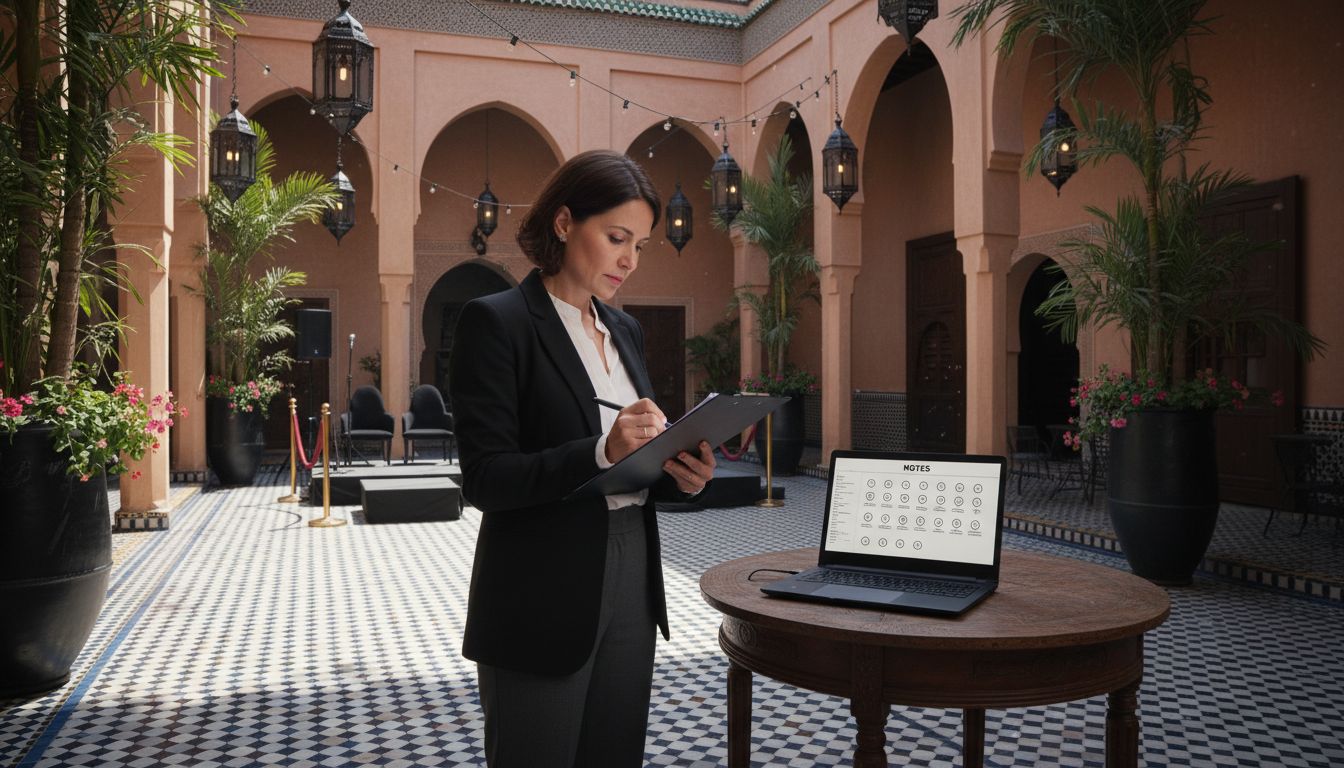
Pro tip: Always visit potential venues in person and schedule site inspections during the same time of day as your planned event to truly understand the space and lighting. This step will help you visualize your event and make an informed decision.
With your venue selected, you are now ready to move forward with the next crucial phase of event planning.
Step 3: Secure vendors and key partners
Selecting the right vendors and partners can transform your Marrakech event from ordinary to extraordinary. This critical step involves building a network of professional collaborators who will bring your event vision to life.
Vendor selection requires a strategic approach that goes beyond simple price comparisons. Look for local professionals who understand Marrakech’s unique cultural landscape and can deliver authentic experiences. Prioritize vendors with proven track records in handling events similar to yours, whether it is a corporate conference, wedding, or incentive travel program.
Begin your vendor search by creating a comprehensive list of essential service providers. This typically includes catering teams, sound and lighting technicians, photographers, decorators, transportation coordinators, and entertainment professionals. Conduct thorough interviews and request detailed portfolios that showcase their previous work. Pay close attention to their communication skills, responsiveness, and ability to understand your specific event requirements.
Pro tip: Always request multiple references and schedule face-to-face or video consultations to assess their professionalism and cultural compatibility. Verify their local licenses, insurance coverage, and past client testimonials to ensure reliability.
With your vendor team assembled, you are now prepared to move into the detailed planning and coordination phase of your Marrakech event.
Step 4: Design event branding and experiences
Event branding transforms an ordinary gathering into an unforgettable journey that resonates with your attendees. This crucial step involves creating a cohesive visual and experiential narrative that captures the essence of your Marrakech event.
Event branding requires strategic planning that goes beyond simple logo design. Begin by developing a comprehensive brand identity that reflects the unique spirit of your event. Consider color palettes inspired by Moroccan landscapes, typography that captures local artistic traditions, and visual elements that tell a compelling story about your event’s purpose.
Assemble a dedicated team responsible for different branding components, including graphic design, marketing communications, and experience creation. Networking event strategies suggest creating immersive experiences that engage participants through interactive elements, cultural touchpoints, and memorable moments that extend beyond traditional event formats.
Pro tip: Design your branding materials early and maintain consistent visual language across all touchpoints including invitations, digital platforms, signage, and event collateral. This approach ensures a seamless and professional presentation that reinforces your event’s core message.
With your branding strategy in place, you are now prepared to move into the detailed execution phase of your Marrakech event.
Step 5: Coordinate logistics and guest management
Logistics and guest management represent the intricate backbone of a successful Marrakech event, transforming your planning from conceptual to operational. This critical phase requires meticulous attention to detail and strategic coordination of multiple complex elements.
Event logistics demand comprehensive planning that encompasses transportation, accommodations, scheduling, and participant flow. Create a detailed timeline that maps out every interaction point for your guests, from arrival in Marrakech through the event conclusion. Consider transportation between venues, check-in procedures, meal arrangements, and any cultural experiences or networking opportunities you have planned.
Develop a robust guest management system that tracks registrations, dietary requirements, communication preferences, and special accommodation needs. Utilize digital tools to streamline communication and provide personalized experiences. Pay special attention to international guests who might require additional support with travel arrangements, visa information, and local cultural orientation.
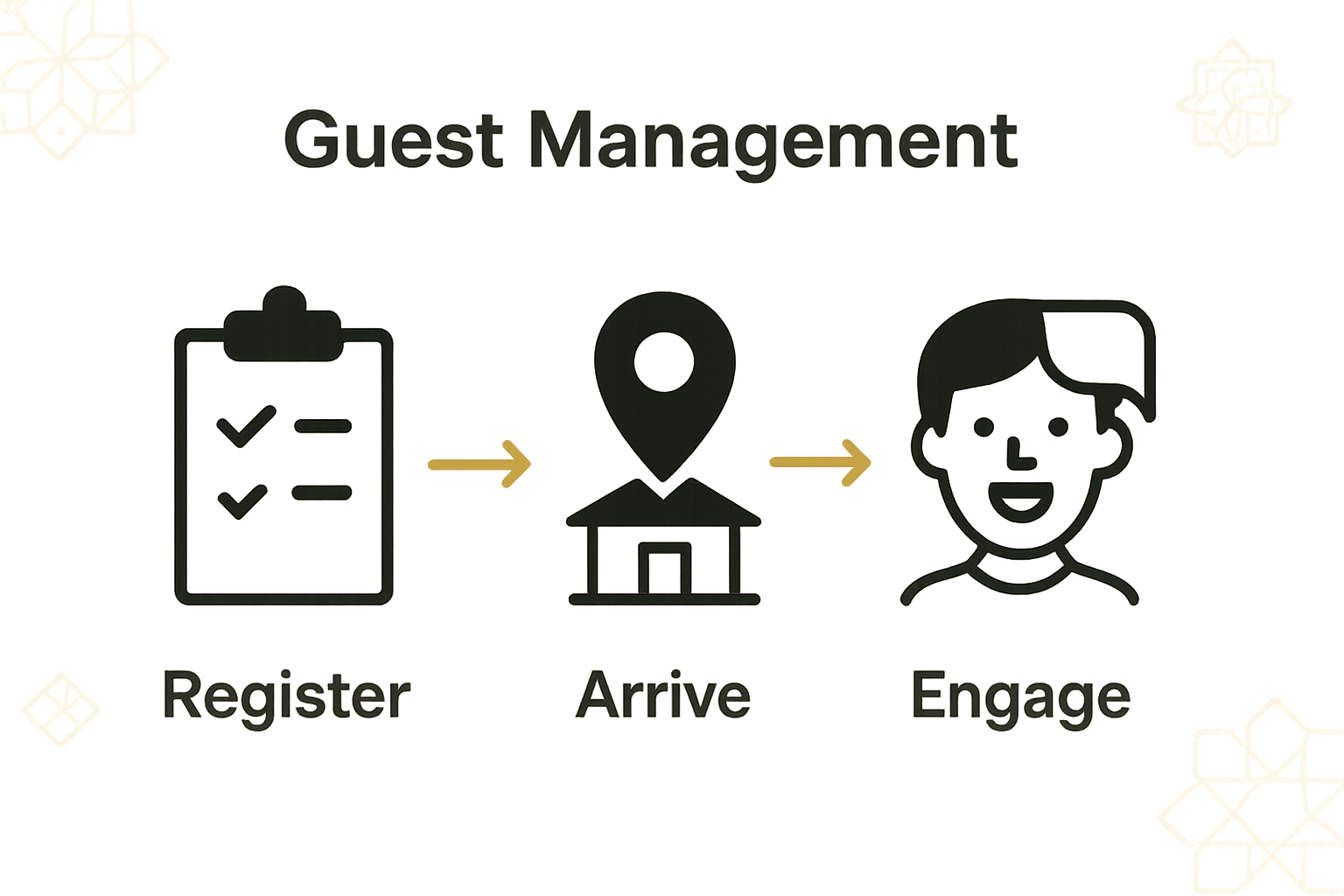
Pro tip: Build flexibility into your logistics plan. Marrakech events often involve intricate cultural nuances and unexpected variables, so maintain a 10-15% contingency buffer in your planning to accommodate last minute adjustments.
With logistics and guest management strategically mapped out, you are now prepared to move into the final execution stages of your Marrakech event.
Step 6: Evaluate event success and feedback
Post-event evaluation is not just a formality but a critical opportunity to understand the true impact of your Marrakech event and refine future experiences. This final step transforms your event from a one-time occurrence into a strategic learning opportunity.
Define clear performance indicators that go beyond simple attendance numbers. Develop comprehensive metrics that capture qualitative and quantitative insights such as participant engagement, networking effectiveness, knowledge transfer, and overall satisfaction. Create survey instruments that capture nuanced feedback through a mix of numerical ratings and open-ended questions that allow participants to share detailed perspectives.
Implement a structured feedback collection process that begins immediately after the event concludes. Utilize digital platforms to distribute surveys, ensuring high response rates by keeping questionnaires concise and targeted. Analyze responses systematically, looking for patterns in participant experiences, identifying strengths to replicate, and uncovering areas requiring improvement in future events.
Pro tip: Follow up with key stakeholders and participants within two weeks of the event to demonstrate your commitment to continuous improvement and maintain relationship momentum.
With your event thoroughly evaluated, you have completed a comprehensive event planning journey that sets the stage for even more successful future experiences in Marrakech.
Elevate Your Marrakech Event Planning Experience
Planning a successful event in Marrakech involves navigating a complex landscape of venue selection, vendor coordination, branding, and logistics. The challenge is clear: turning your event objectives and budget into a flawless, memorable experience while managing every detail from cultural nuances to guest satisfaction. Whether you face uncertainty in choosing the perfect traditional riad or need expert support to coordinate international guests, the intricate steps outlined in the guide highlight the need for professional assistance.
You do not have to face these challenges alone. At Morocco Events: Morocco’s Premier Event and Wedding Planner, we specialize in crafting tailored event solutions that balance rich Moroccan heritage with modern sophistication. Our experienced team offers comprehensive services including venue sourcing, vendor management, creative branding, and seamless logistics that bring your vision to life effortlessly. Harness the power of our well-established local network and multilingual coordination to ensure your Marrakech event stands out.
Ready to transform your event plans into reality with expert guidance and unmatched local expertise Visit MoroccoEvents.com today and discover how our full-service offerings can simplify your journey and deliver extraordinary results.
Frequently Asked Questions
What are the first steps in planning a Marrakech event?
Starting an event requires defining clear objectives and establishing a realistic budget. Begin by assessing the purpose of your event, such as a corporate conference or a wedding, and create a detailed budget that categorizes potential expenses with a buffer for unexpected costs.
How do I choose the right venue for my event in Marrakech?
Selecting a venue involves considering factors like guest capacity, accessibility, and unique cultural elements. Visit potential venues in person to assess their suitability and schedule site inspections during the time of day aligned with your event to understand lighting and atmosphere.
What types of vendors should I secure for a Marrakech event?
Focus on local vendors who understand the cultural nuances of Marrakech and have experience with your type of event. Create a list of essential service providers such as caterers, decorators, and transportation coordinators, and conduct thorough interviews to find the best fit.
How can I create effective branding for my Marrakech event?
Developing a cohesive branding strategy involves crafting a brand identity that reflects the spirit of your event. Assemble a team responsible for different branding components, including graphic design and marketing materials, ensuring that all visual elements are consistent.
What logistical considerations should I keep in mind for my event?
Pay attention to comprehensive logistical planning, including transportation, accommodation, and scheduling. Create a detailed timeline that outlines every interaction point for guests, ensuring smooth transitions and experiences throughout the event.
How do I evaluate the success of my Marrakech event?
To evaluate your event’s success, define clear performance indicators that capture both quantitative and qualitative insights. Collect feedback through surveys immediately after the event and analyze responses for patterns to improve future events.