How to Organize Networking Events for Impactful Connections
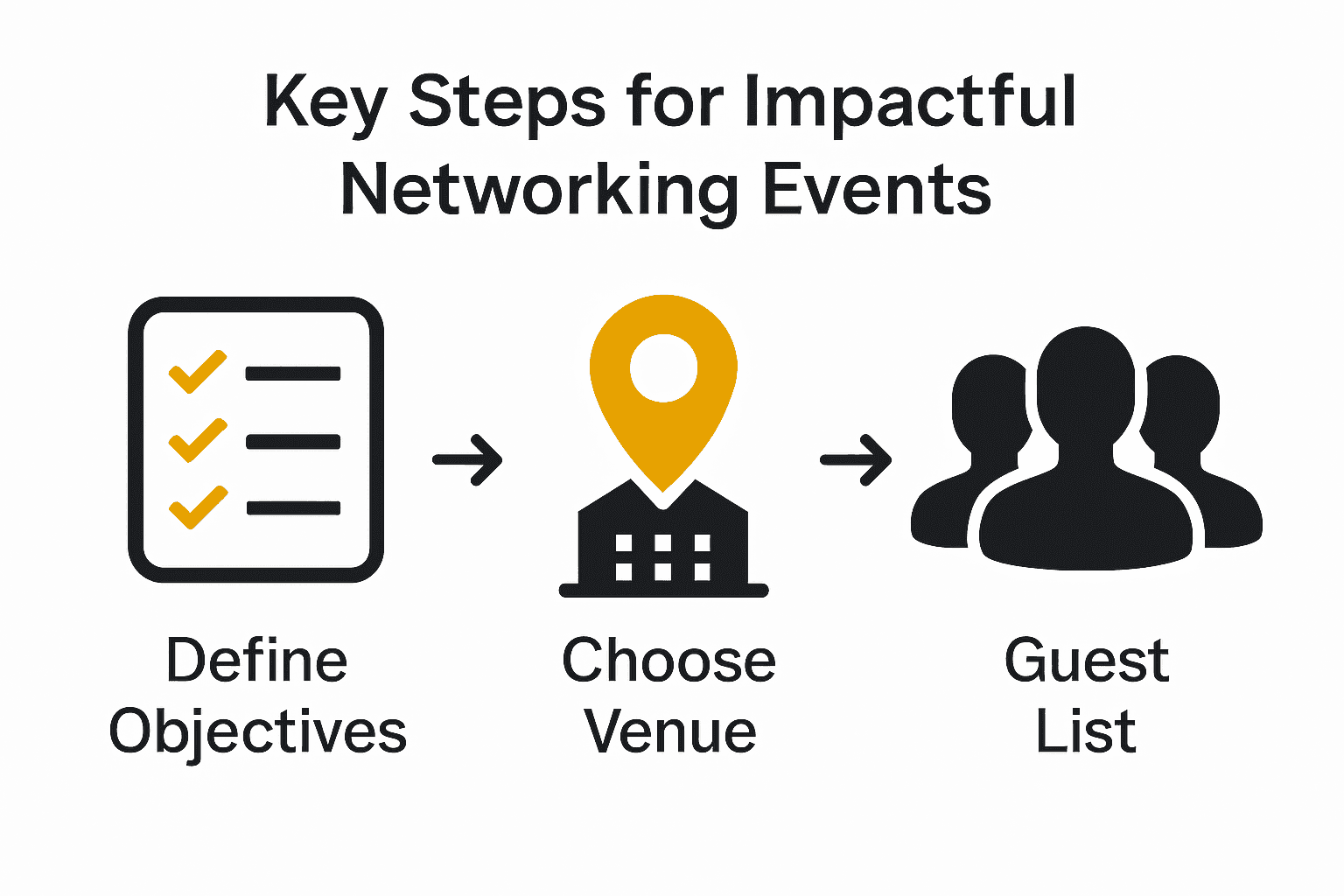
More than 60 percent of american professionals say that effective networking events have advanced their careers. Planning one that truly delivers value takes more than sending invites and hoping for the best. To make meaningful connections, every detail matters from setting clear objectives to selecting the perfect guests and activities. This guide offers practical steps to help you create networking events that spark genuine opportunities and lasting relationships.
Table of Contents
- Step 1: Define Your Event Objectives And Target Audience
- Step 2: Select The Perfect Venue And Format
- Step 3: Curate An Engaging Guest List And Send Invites
- Step 4: Design Interactive Activities And Facilitate Connections
- Step 5: Monitor Event Flow And Gather Participant Feedback
Quick Overview
| Essential Insight | Explanation |
|---|---|
| 1. Define Clear Objectives | Establish SMART goals to guide planning and ensure successful networking outcomes. |
| 2. Choose the Right Venue | Select accessible venues that promote organic networking with varied interaction spaces. |
| 3. Curate a Strategic Guest List | Invite diverse attendees aligned with event goals to enhance networking potential. |
| 4. Implement Interactive Activities | Use structured activities to facilitate meaningful connections and engagement among attendees. |
| 5. Monitor and Gather Feedback | Collect participant insights during the event to evaluate success and improve future gatherings. |
 |
|
Step 1: Define Your Event Objectives and Target Audience
Successful networking events start with crystal clear objectives and a precise understanding of your target audience. According to University of Waterloo, defining your event’s purpose and goals is foundational to effective planning.
To develop robust event objectives, adopt the SMART framework recommended by Knowles Training Institute. This means crafting goals that are Specific, Measurable, Achievable, Relevant, and Time-bound. For networking events, this might translate to objectives like “Connect 50 professionals from technology sectors within a three-hour session” or “Generate 25 potential business collaborations during the event”.
Audience research becomes your strategic compass here. Dive deep into understanding who you want to attract demographic details, professional backgrounds, and networking motivations. Are you targeting startup founders, mid-level managers, or industry specialists? Each group requires a tailored approach. By meticulously defining your objectives and audience, you transform a generic gathering into a powerful connection platform where meaningful professional relationships can flourish.

Pro tip: Always create a one-page event brief that clearly outlines your objectives, target audience profile, and expected outcomes. This document will guide your entire event planning process and help maintain focus.
Step 2: Select the Perfect Venue and Format
Choosing the right venue and event format is critical to creating an environment that naturally encourages networking and meaningful connections. Studio Noorderfabriek emphasizes the importance of selecting spaces that facilitate organic interactions among participants.
Consider venues that offer multiple conversation zones and flexible layouts. Ideal networking spaces might include open floor plans with distinct areas for small group discussions, large communal tables, and comfortable seating arrangements that promote spontaneous conversations. According to School of Advanced Study, the venue should be accessible and welcoming to ensure maximum participant engagement. This means evaluating practical aspects like parking availability, public transportation proximity, and overall ease of access.
The event format plays an equally crucial role in networking success. Options range from structured roundtable sessions and speed networking formats to more relaxed mixer environments. Your chosen format should align with your target audience and event objectives. For technology sector professionals, you might opt for a workshop style with collaborative problem solving stations. For creative industries, a more fluid and interactive format might work best.
Pro tip: Always visit potential venues in person. Virtual tours and images can be misleading, but a physical walkthrough will help you truly understand the space’s networking potential and potential interaction dynamics.
Step 3: Curate an Engaging Guest List and Send Invites
Curating the right guest list is the backbone of a successful networking event. Airmeet emphasizes that your attendee selection should directly align with your event’s core objectives and create opportunities for meaningful professional connections.
Begin by developing a strategic guest list that balances diversity and relevance. Consider professionals from complementary industries who can benefit from cross sector interactions. Look beyond simple job titles and evaluate potential attendees based on their unique expertise, innovation potential, and willingness to engage. According to Growett, the invitation process itself should clearly communicate the event’s purpose and potential value for participants.
When crafting invitations, personalization is key. Move beyond generic email templates and create targeted messaging that speaks directly to each potential attendee’s professional interests and potential networking opportunities. Include specific details about what makes your event unique concrete networking goals, anticipated interactions, and potential collaborative outcomes. Your invite should answer the critical question every professional asks: What’s in it for me?
Pro tip: Leverage professional networks and referrals. Sometimes the most powerful invitations come through trusted connections who can personally recommend your event to high quality potential attendees.
Step 4: Design Interactive Activities and Facilitate Connections
Designing interactive activities that naturally spark meaningful professional connections is both an art and a science. Wikipedia highlights speed networking as an efficient method for accelerating business contacts through structured brief interactions that allow participants to quickly share professional backgrounds and goals.
Consider implementing a mix of structured and organic networking formats. Traditional speed networking can be complemented with more dynamic approaches like themed discussion zones, collaborative problem solving stations, or technology enabled matchmaking. Research from arXiv suggests integrating smart technology to provide personalized session recommendations that enhance attendee engagement and connection potential. This might include using event apps that suggest potential connections based on professional profiles or shared interests.
Craft activities that go beyond surface level introductions. Design challenges that require collaborative thinking professional skill demonstrations or interactive workshops where participants must work together to solve complex scenarios. These approaches transform networking from transactional business card exchanges into genuine collaborative experiences. The key is creating environments where professionals feel motivated to genuinely engage share insights and explore potential synergies.
Pro tip: Always have a professional facilitator or experienced host who can guide interactions monitor group dynamics and help break the ice for participants who might feel uncomfortable initiating conversations.
Step 5: Monitor Event Flow and Gather Participant Feedback
Effective event management requires real time monitoring and strategic feedback collection. According to McCune Foundation, tracking event flow and collecting participant insights are critical for assessing success and identifying improvement opportunities.
Deploy multiple feedback mechanisms throughout the event. This can include live digital surveys accessible via event apps, strategically placed feedback stations, and informal conversation checkpoints where attendees can share immediate impressions. Science Week recommends utilizing both structured surveys and direct observations to capture comprehensive participant experiences. Consider using a mix of quantitative rating scales and qualitative open ended questions that allow attendees to provide nuanced feedback about networking opportunities connection quality and overall event value.
Assign dedicated team members to circulate during the event observing interactions monitoring participant engagement and quickly addressing any emerging logistical challenges. These on the ground ambassadors can provide real time insights and help maintain smooth event flow. Their observations combined with participant feedback will create a holistic understanding of the event’s effectiveness and highlight potential refinements for future networking sessions.
Pro tip: Design your feedback mechanism to be quick and engaging. Lengthy surveys often get ignored so aim for concise yet meaningful data collection that respects participants time and energy.
Elevate Your Networking Events with Expert Planning in Morocco
Organizing a networking event that truly delivers impactful connections can be challenging. The need to define clear objectives, select the perfect venue, curate an engaging guest list, and design interactive activities requires specialized knowledge and experience. If you want your event to foster genuine professional relationships and leave a lasting impression, relying on expert support is essential.
At Morocco Events: Morocco’s Premier Event and Wedding Planner, we understand the importance of tailored event solutions that align with your goals and audience needs. Our team combines deep local insight with international standards to deliver seamless event management in Marrakech and across Morocco. From venue sourcing to personalized guest experiences and real-time event flow monitoring, we cover every detail to ensure your networking event stands out.
Ready to transform your networking vision into a memorable, high-impact event? Discover how our comprehensive services at MoroccoEvents.com can help you connect professionals in meaningful ways. Visit our homepage now and start planning an event that drives results and lasting connections.
Frequently Asked Questions
How do I define objectives for my networking event?
To define effective objectives, use the SMART framework by making goals Specific, Measurable, Achievable, Relevant, and Time-bound. For example, aim to connect 50 professionals from tech sectors within three hours of the event.
What factors should I consider when selecting a venue for a networking event?
Choose a venue that encourages interactions, such as one with open layouts and multiple conversation zones. Ensure the space is accessible and welcoming to enhance participant engagement.
How can I create a guest list that fosters meaningful connections?
Develop a strategic guest list that balances diversity and relevance by including professionals from complementary industries. Focus on individuals who can contribute valuable insights and are willing to actively engage.
What types of activities can enhance networking at my event?
Incorporate a mix of structured and organic activities, such as speed networking, themed discussion zones, and collaborative workshops. This variety encourages genuine professional interactions beyond simple introductions.
How can I effectively gather feedback during my networking event?
Implement multiple feedback mechanisms like live surveys or informal conversation checkpoints to capture participant experiences. Aim to collect quick, meaningful feedback to enhance future events and improve overall networking quality.
What should I do if I notice engagement dropping during the event?
Assign team members to monitor participant interactions and offer support as needed. Quickly address any logistical challenges or facilitate conversations to re-engage attendees and keep the event flowing smoothly.