Master the Event Planning Workflow Morocco Process
Most American planners are surprised to learn that over 60 percent of international events in Morocco succeed because of meticulous organization from the very first step. Defining clear objectives and outlining a precise scope are mission critical, whether you are coordinating a conference or a luxury celebration. This simple yet often overlooked strategy sets the stage for every essential decision that follows, giving your team the clarity needed to handle Morocco’s dynamic event scene with confidence.
Table of Contents
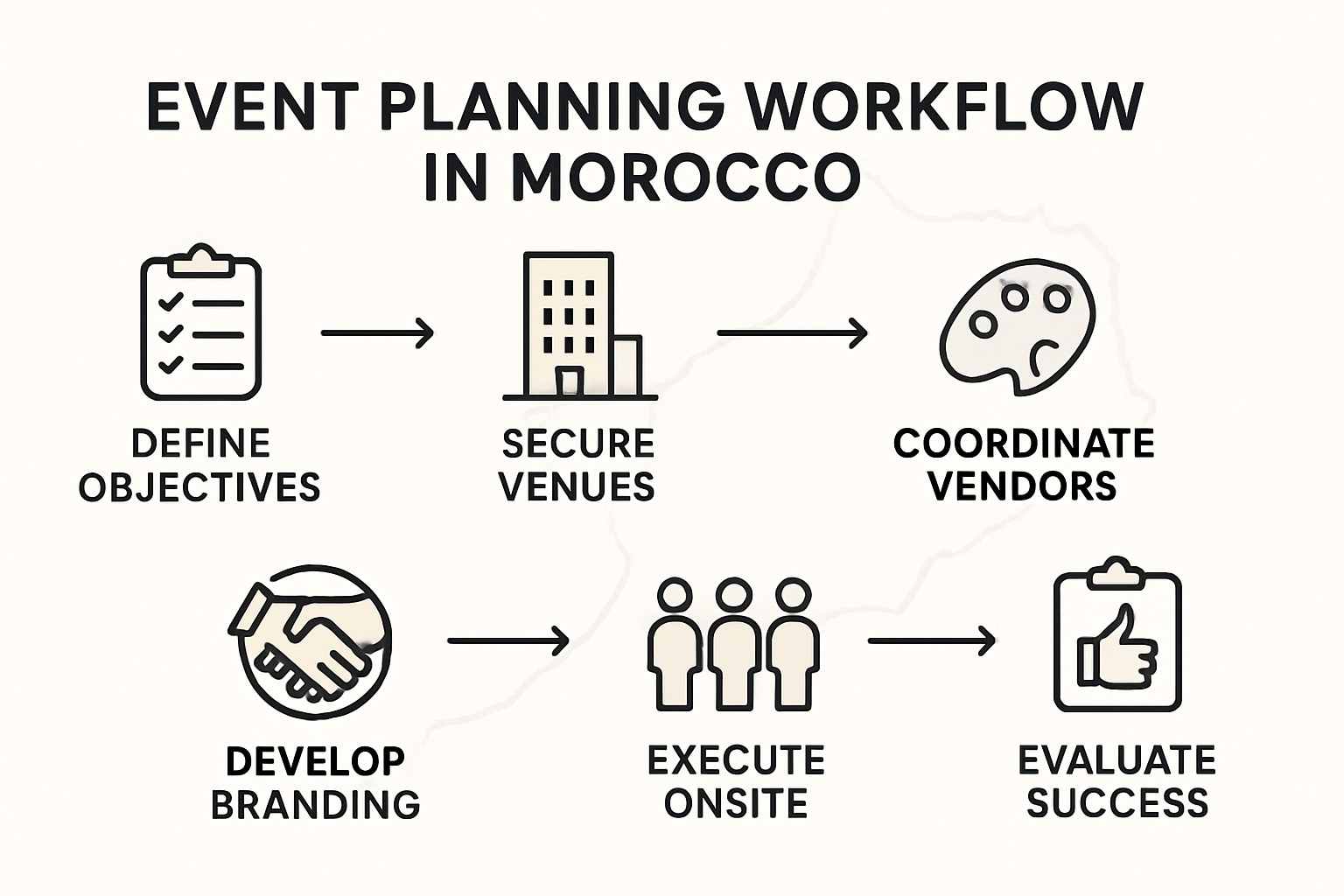
- Step 1: Define Objectives And Event Scope
- Step 2: Research And Secure Moroccan Venues
- Step 3: Coordinate Vendors And Logistics
- Step 4: Develop Creative Concepts And Branding
- Step 5: Execute And Supervise Onsite Operations
- Step 6: Evaluate Event Success And Client Satisfaction
Quick Summary
| Key Insight | Explanation |
|---|---|
| 1. Clearly Define Event Objectives | Establish specific, measurable goals to guide all planning decisions and align with client expectations. |
| 2. Research Ideal Venues | Find venues that match your objectives while enhancing the event’s atmosphere by assessing key factors like capacity and location. |
| 3. Coordinate Vendors Effectively | Build a detailed vendor matrix and ensure clear communication to create a reliable support network for the event. |
| 4. Develop a Strong Branding Strategy | Create a cohesive visual narrative through mood boards that resonate with your audience and reflect event goals. |
| 5. Evaluate Outcomes Post-Event | Conduct in-depth evaluations analyzing both quantitative data and qualitative feedback for continuous improvement in future planning. |
Step 1: Define Objectives and Event Scope
Successfully defining the objectives and scope is the foundational blueprint for your entire event planning workflow in Morocco. This crucial first step transforms vague ideas into a strategic roadmap that guides every subsequent decision.
Start by conducting a comprehensive analysis that identifies the precise goals and purpose of your event. Are you organizing a corporate conference, a team building retreat, or a luxury wedding? Each event type demands unique strategic considerations. Break down your objectives into specific, measurable outcomes such as attendee engagement, networking opportunities, or brand exposure. Drawing from established event management principles, ensure your objectives align with both client expectations and practical execution capabilities.
Pro tip: When defining event scope, create a detailed framework that outlines expected attendees, target demographics, potential venues, and anticipated budget. This granular approach prevents scope creep and provides a clear reference point for all stakeholders. Remember that a well defined scope acts as your project compass, helping you navigate complex event planning challenges with precision and confidence.
Step 2: Research and Secure Moroccan Venues
Researching and securing the perfect venue is a critical phase in your event planning workflow that can make or break the entire experience. Your goal is to find a location that not only matches your event objectives but also captures the unique essence of Morocco.
Begin your venue search by exploring specialized event planning resources in Morocco that offer comprehensive insights into local options. Consider the diversity of Moroccan venues from luxurious riads in Marrakech to modern conference centers in Casablanca. Evaluate each potential location based on key criteria such as capacity, accessibility, technical capabilities, and aesthetic appeal. Pay special attention to logistical details like parking, audio visual equipment, catering facilities, and proximity to accommodation for out of town guests.
Pro tip: When negotiating venue contracts, always request a detailed walkthrough and obtain multiple quotes to ensure transparent pricing. Morocco offers an incredible range of venues from traditional architectural marvels to contemporary spaces, so take time to understand the unique characteristics of each location. Your careful research will help you select a venue that not only meets practical requirements but also creates an unforgettable atmosphere for your event.
Step 3: Coordinate Vendors and Logistics
Coordinating vendors and logistics forms the intricate backbone of your event planning workflow, transforming conceptual designs into tangible experiences. This crucial stage requires meticulous organization, strategic communication, and careful negotiation with multiple service providers across Morocco.
Begin by developing comprehensive event logistics strategies that account for the diverse requirements of your specific event. Create a detailed vendor matrix that includes local professionals specializing in areas such as catering, audiovisual equipment, transportation, and entertainment. Consider the unique cultural nuances of Moroccan events, which often blend traditional hospitality with modern professional standards. For instance, when planning musical entertainment, you might draw inspiration from events like Jazzablanca, which demonstrates the sophisticated approach to coordinating diverse artistic performances.
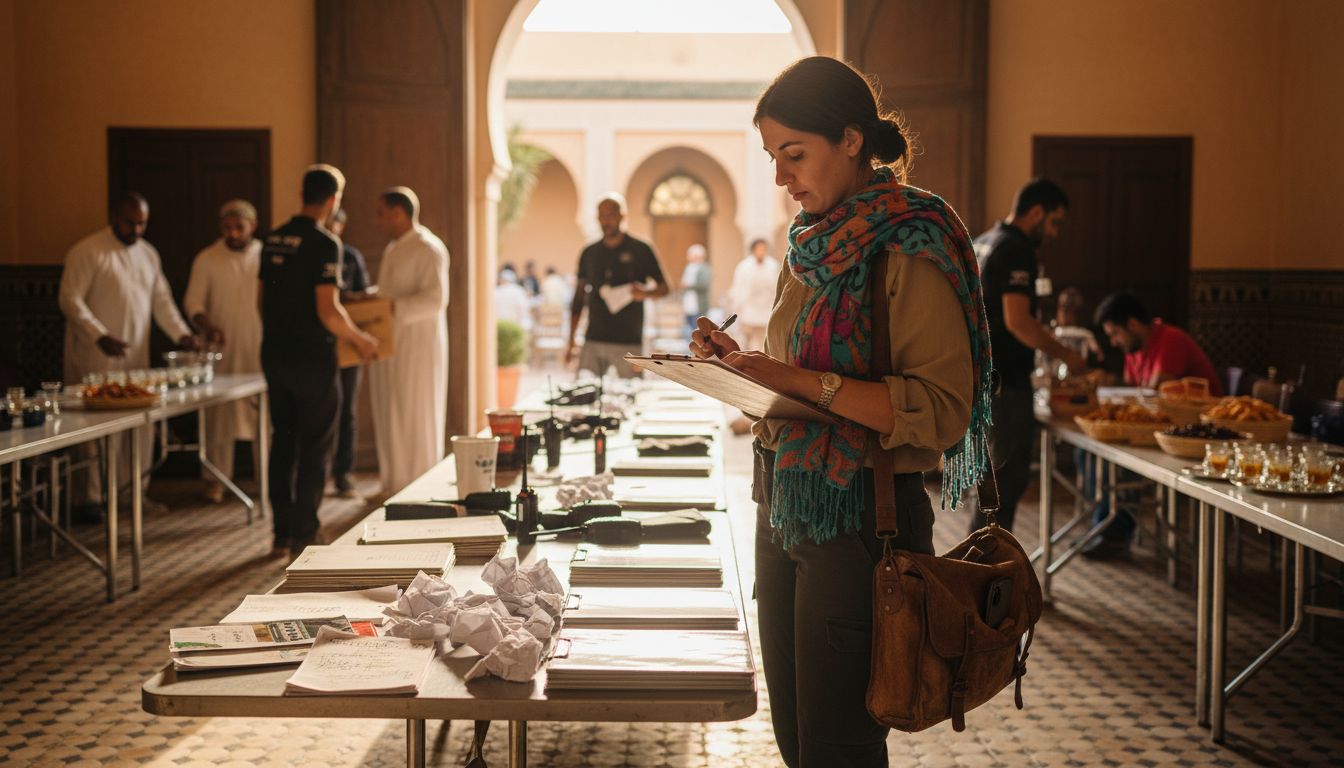
Pro tip: Always develop contingency plans and maintain open communication channels with each vendor. Request detailed contracts that clearly outline responsibilities, timelines, and potential backup scenarios. By establishing transparent expectations and building strong relationships with local vendors, you will create a robust support network that can adapt quickly to any unexpected challenges during your event preparation.
Step 4: Develop Creative Concepts and Branding
Developing creative concepts and branding transforms your event from a mere gathering into a memorable experience that resonates with your audience. This critical phase requires strategic thinking, cultural sensitivity, and innovative design that captures the essence of your event objectives.
Begin by drawing inspiration from Morocco’s rich artistic landscape. Explore creative references like the Museum of African Contemporary Art Al Maaden, which demonstrates how cultural institutions blend traditional and modern design elements. Your branding strategy should reflect the unique narrative of your event, incorporating visual elements that speak to your specific audience. Consider how spaces like Bayt Dakira use storytelling and design to create meaningful connections, a principle you can apply to your event’s visual identity.
Pro tip: Develop a comprehensive mood board that captures the emotional and visual essence of your event. Include color palettes, typography, imagery, and design elements that communicate your event’s core message. Ensure your branding is versatile enough to work across different media while maintaining a consistent and compelling narrative that will engage and excite your attendees.
Step 5: Execute and Supervise Onsite Operations
Executing and supervising onsite operations represents the critical moment where months of meticulous planning transform into a live experience. Your role shifts from strategic planner to real time problem solver, requiring laser focused attention and adaptable leadership skills.
Implement a comprehensive operational strategy that mirrors the adaptive approaches of successful cultural events. Learn from examples like Jazzablanca, which demonstrates how sophisticated event management involves more than just managing the primary event schedule. Create a detailed minute by minute timeline that includes setup protocols, staff assignments, contingency plans, and precise communication channels. Assign specific roles to your team members, ensuring each person understands their responsibilities and has clear escalation procedures for unexpected challenges.
Pro tip: Develop a centralized communication hub with real time tracking and instant messaging capabilities. Station team leaders at strategic locations with direct communication devices, enabling rapid response to any operational disruptions. Your ability to remain calm, make swift decisions, and maintain a seamless guest experience will ultimately define the success of your event.
Step 6: Evaluate Event Success and Client Satisfaction
Evaluating event success goes far beyond simple numerical metrics it requires a comprehensive approach that captures the nuanced experiences of your attendees and stakeholders. This critical final step transforms your event from a standalone experience into a strategic learning opportunity for future planning.
Setting clear objectives is fundamental to conducting a meaningful post event analysis. Develop a multifaceted evaluation framework that includes quantitative metrics like attendance numbers and engagement rates, alongside qualitative feedback that reveals deeper insights into participant experiences. Specific target measurements allow you to systematically assess whether you achieved the original event goals, providing a structured method for understanding your performance.
Pro tip: Create a comprehensive feedback mechanism that goes beyond standard survey questions. Design interactive feedback sessions, conduct individual interviews with key stakeholders, and utilize digital tools that capture real time sentiment. Your goal is not just to collect data but to uncover actionable insights that will elevate your future event planning strategies and demonstrate your commitment to continuous improvement.
Elevate Your Event Planning Workflow with Trusted Expertise in Morocco
Mastering the event planning workflow in Morocco means overcoming challenges like defining clear objectives, securing authentic venues, managing diverse vendors, and delivering flawless onsite operations. If you aim to transform these complex stages into a seamless, memorable experience you need a partner who understands the unique nuances of Moroccan events and blends tradition with innovation. Key pain points such as detailed scope definition, vendor coordination, and creative branding require tailored solutions backed by local expertise and a reliable network.
That is where Morocco Events: Morocco’s Premier Event and Wedding Planner excels. With a proven track record in Marrakech and beyond, they specialize in handling everything from luxury weddings to international corporate conferences. Their customized services include comprehensive venue sourcing, cutting-edge multimedia production, and multilingual coordination designed to relieve your execution burdens. Don’t let uncertainty stall your next event. Visit MoroccoEvents.com today and partner with the trusted full-service event planner that transforms your vision into reality. Take the next step now and experience why so many high-profile clients rely on MoroccoEvents for flawless execution backed by creativity and reliability.
Frequently Asked Questions
What are the first steps in the Event Planning Workflow Morocco process?
To start the Event Planning Workflow Morocco process, clearly define your objectives and scope. Break down your goals into specific outcomes such as attendee engagement or brand exposure, and create a detailed framework including expected attendees and budget.
How can I research venues for my event in Morocco?
Researching venues in Morocco involves exploring various options based on capacity and accessibility. Begin by making a list of potential venues, and evaluate each based on key criteria like technical capabilities and aesthetics to ensure the best match for your event goals.
What should I know about coordinating vendors and logistics?
Coordinating vendors and logistics is crucial for transforming your plans into reality. Develop a vendor matrix including professionals in catering, audiovisual services, and transportation, and maintain clear communication with each vendor to ensure smooth operations during your event.
How do I create effective branding for my event?
To create effective branding, draw inspiration from the cultural elements relevant to your event and develop a mood board that captures your event’s visual and emotional essence. Incorporate design elements that align with your objectives and ensure brand consistency across all materials.
What steps should I take to evaluate my event’s success?
To evaluate your event’s success, establish clear objectives to measure against and employ a multifaceted framework that combines both quantitative metrics and qualitative feedback. Utilize interactive methods to gather insights from attendees and stakeholders to inform future planning efforts.
How can I prepare for onsite operations during my event?
Prepare for onsite operations by developing a comprehensive operational strategy that includes a detailed timeline and assigned roles for your team. Establish a centralized communication hub for real-time updates, enabling quick responses to any unexpected situations during the event.