Role of Event Management in Corporate Incentives: Why It Matters
Over 60 percent of American businesses now use incentive events to drive employee motivation and boost company performance. The right event management approach can transform a routine corporate gathering into a memorable experience with lasting impact. Understanding how American organizations strategically plan, customize, and measure these events helps companies unlock new levels of engagement, team morale, and business results.
Table of Contents
- Defining Event Management In Corporate Incentives
- Types Of Corporate Incentive Events In Practice
- Strategic Planning And Customization Processes
- Measuring Impact And Business Outcomes
- Challenges, Risks, And How To Mitigate Them
Key Takeaways
| Point | Details |
|---|---|
| Strategic Event Management | Corporate event management is essential for creating experiences that motivate employees and align with business goals. |
| Types of Events | Key event types include performance reward trips, team development workshops, and annual conferences, each aimed at boosting engagement and organizational culture. |
| Importance of Strategic Planning | Effective strategic planning and customization are crucial for aligning events with organizational objectives and enhancing employee motivation. |
| Measuring Impact | Comprehensive evaluation frameworks are necessary for understanding the true impact of corporate incentive events on employee performance and organizational outcomes. |
Defining Event Management in Corporate Incentives
Corporate event management represents a strategic approach to planning, executing, and managing professional gatherings designed to drive organizational objectives. At its core, event management in corporate incentives involves creating structured experiences that motivate employees, strengthen team dynamics, and align with broader business goals. The Event Management Institute defines this process as a systematic method of designing professional events that go beyond traditional meetings.
Within the realm of corporate incentives, event management encompasses multiple critical dimensions. These include strategic planning, logistical coordination, participant engagement, and measurable outcome tracking. Professionals in this field must understand how to transform corporate gatherings from mere administrative requirements into powerful engagement tools. The primary objectives include boosting employee morale, recognizing outstanding performance, facilitating team building, and creating memorable experiences that reinforce company culture.
The scope of corporate event management extends far beyond simple logistics. It requires a sophisticated understanding of organizational psychology, communication strategies, and experiential design. Event managers must skillfully blend technical execution with creative storytelling, ensuring that each corporate incentive event communicates meaningful messages while delivering tangible business value. From international conference planning to team-building retreats, these professionals craft experiences that can significantly impact employee motivation and organizational performance.
Types of Corporate Incentive Events in Practice
Corporate incentive events represent a strategic approach to recognizing and motivating employees through carefully designed experiences. FCM Travel highlights several distinctive event categories that organizations can leverage to boost engagement and performance. These events range from formal recognition ceremonies to immersive team-building retreats, each tailored to specific organizational objectives and employee dynamics.
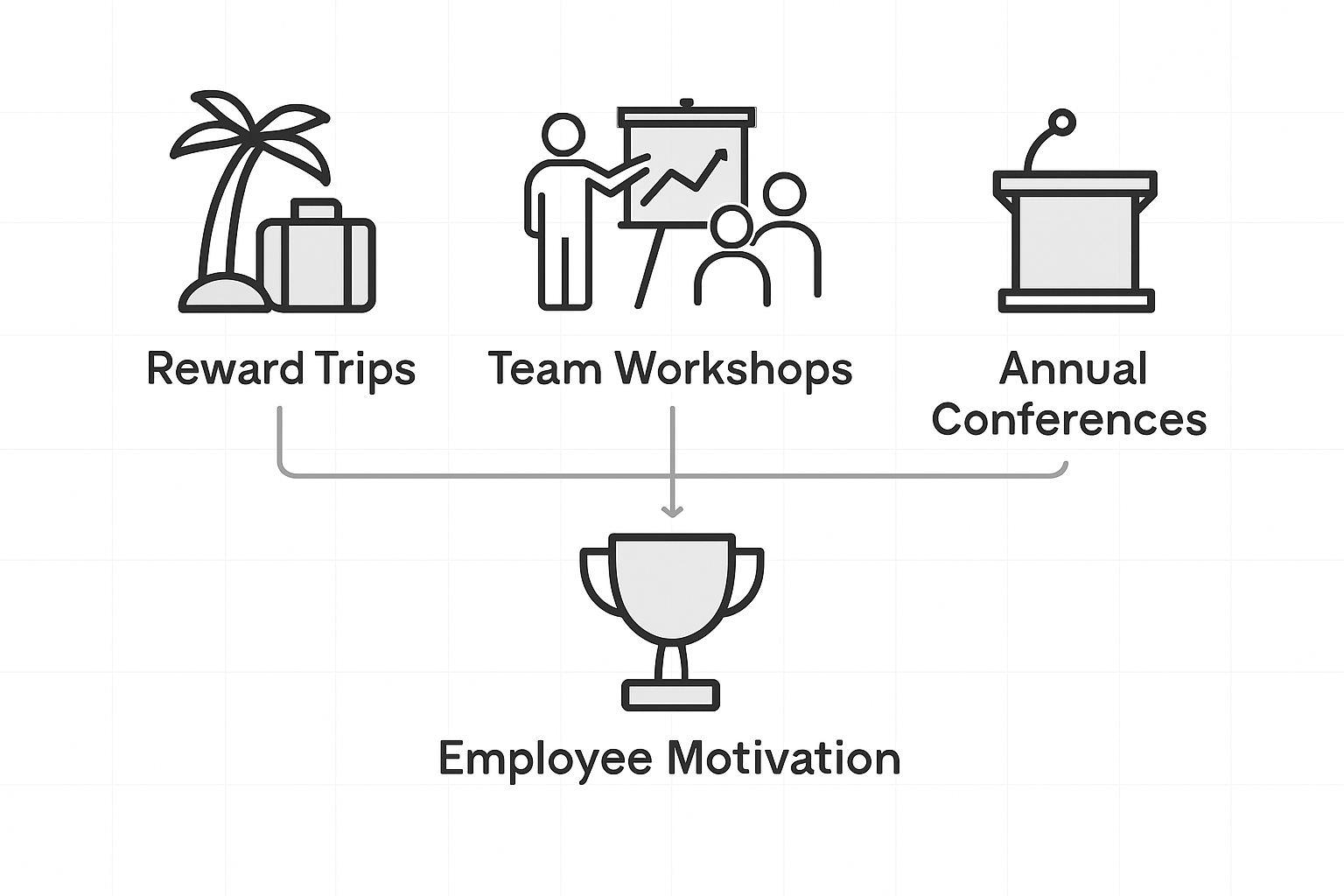
The primary types of corporate incentive events include performance reward trips, team development workshops, annual conferences, leadership summits, and client appreciation gatherings. Performance reward trips are particularly powerful, offering top-performing employees exclusive travel experiences that serve as tangible recognition of their achievements. These events not only motivate individual contributors but also create aspirational benchmarks for the entire organization. Team development workshops focus on skill enhancement, collaborative problem-solving, and interpersonal relationship building through structured interactive experiences.
Moreover, corporate incentive events extend beyond traditional reward mechanisms. They function as strategic tools for cultural alignment, knowledge transfer, and organizational communication. Types of corporate events can include international conferences that bring global teams together, innovative product launch events, networking symposiums, and executive leadership retreats. The key is designing experiences that are memorable, meaningful, and directly aligned with broader business strategies. Each event type serves a unique purpose: from reinforcing company values to providing platforms for professional growth and interdepartmental collaboration.
Strategic Planning and Customization Processes
Strategic planning in corporate incentive events represents a sophisticated approach to designing targeted experiences that align precisely with organizational goals. The EVM Institute emphasizes the critical role of meticulous planning in creating transformative experiences that motivate employees and drive performance. This process involves a comprehensive analysis of company objectives, workforce demographics, and specific motivational requirements to craft truly impactful events.
The customization process typically follows a structured methodology that includes several key stages. First, event managers conduct in-depth organizational assessments, analyzing company culture, employee performance metrics, and specific motivational challenges. This initial research phase allows for the development of tailored incentive strategies that resonate with specific team dynamics. Customization techniques may include developing personalized recognition approaches, creating tiered reward structures, and designing experiences that speak directly to different employee segments and professional aspirations.

Effective strategic planning goes beyond surface-level engagement, requiring a nuanced understanding of organizational psychology and employee motivation. This involves creating multi-dimensional event experiences that combine tangible rewards with meaningful professional development opportunities. The most successful corporate incentive events integrate elements of recognition, skill enhancement, team building, and personal growth. By carefully aligning event design with broader organizational objectives, companies can transform traditional incentive programs into powerful tools for talent retention, performance improvement, and cultural reinforcement. The ultimate goal is to create experiences that not only reward past achievements but also inspire future excellence and deeper organizational commitment.
Measuring Impact and Business Outcomes
Measuring the effectiveness of corporate incentive events requires a comprehensive and multifaceted approach that goes beyond traditional performance metrics. Research exploring the effects of incentives and social norms reveals the complex relationship between motivational strategies and organizational performance. Impact measurement involves developing sophisticated evaluation frameworks that capture both quantitative and qualitative outcomes, providing a holistic understanding of an event’s true business value.
Key performance indicators for assessing corporate incentive events typically include multiple dimensions. Quantitative metrics might encompass direct measurements such as sales performance improvements, productivity increases, employee retention rates, and return on investment calculations. Qualitative assessments focus on employee engagement levels, cultural alignment, team cohesion, and individual motivation transformation. Organizations often employ advanced analytical tools and survey methodologies to track these multidimensional outcomes, creating nuanced performance profiles that reveal the deeper impact of incentive experiences.
Scientific studies in organizational management emphasize the importance of developing robust measurement frameworks that extend beyond immediate performance indicators. The most effective evaluation strategies integrate longitudinal tracking, comparing pre-event baseline metrics with post-event performance data. This approach allows companies to understand the sustained impact of incentive programs, revealing how these experiences create lasting changes in employee behavior, organizational culture, and strategic alignment. Sophisticated measurement techniques might include behavioral assessments, psychological engagement surveys, peer feedback mechanisms, and comprehensive performance trajectory analysis, providing a 360-degree view of an incentive event’s transformative potential.
Challenges, Risks, and How to Mitigate Them
Corporate incentive events present a complex landscape of potential challenges that require strategic anticipation and proactive management. Research in international marketing highlights critical risk management strategies essential for successful event execution. The primary challenges encompass budget constraints, logistical complexities, participant engagement, and alignment with organizational objectives, each demanding nuanced mitigation approaches.
Key risks in corporate incentive events include unexpected financial overruns, low participant satisfaction, cultural misalignments, and inadequate performance measurement. Organizations must develop comprehensive risk management frameworks that incorporate detailed contingency planning, flexible budgeting, and robust communication strategies. Mitigation techniques typically involve extensive pre-event research, stakeholder consultations, rigorous vendor selection processes, and continuous feedback mechanisms that allow for real-time adjustments and improvements.
Global business event management research underscores the importance of developing standardized yet adaptable event protocols. Effective risk mitigation requires a multilayered approach that balances strategic planning with operational flexibility. This involves creating detailed event blueprints, conducting comprehensive risk assessments, implementing redundant communication channels, and maintaining agile decision-making processes. Successful organizations view potential challenges not as obstacles but as opportunities for innovation, using each event as a learning experience to refine future incentive program strategies and enhance overall organizational performance.
Transform Your Corporate Incentive Events with Expert Management
The article highlights the challenges of planning corporate incentive events that truly motivate employees and align with organizational goals. Managing complex logistics, customizing experiences to fit diverse teams, and measuring the impact on employee engagement are pain points many organizations face. Achieving memorable and effective corporate incentive events requires a partner who understands strategic planning, customization, and risk mitigation all while delivering seamless execution.
At Morocco Events: Morocco’s Premier Event and Wedding Planner, we specialize in crafting tailored corporate events that elevate your brand and inspire your workforce. Our deep expertise in incentive travel, team-building retreats, and international conferences means we handle every detail—from venue sourcing to creative branding and multilingual coordination—making your event impactful and stress free. Don’t let the challenge of strategy or logistics hold you back.
Experience the perfect blend of traditional Moroccan aesthetics with modern event trends by partnering with MoroccoEvents.com. Explore our full suite of professional event planning and management services and take the first step toward transforming your corporate incentives into unforgettable experiences that drive performance and loyalty. Act now to leverage our trusted network and innovative approach to event success!
Frequently Asked Questions
What is the role of event management in corporate incentives?
Event management in corporate incentives plays a crucial role in planning and executing events that motivate employees, strengthen team dynamics, and align with business objectives.
How can corporate incentive events boost employee morale?
Corporate incentive events boost employee morale by recognizing outstanding performance, providing opportunities for team building, and creating memorable experiences that reinforce company culture.
What types of events are typically included in corporate incentive programs?
Typical events in corporate incentive programs include performance reward trips, team development workshops, annual conferences, leadership summits, and client appreciation gatherings.
How can organizations measure the impact of incentive events?
Organizations can measure the impact of incentive events through quantitative metrics like sales performance and employee retention rates, as well as qualitative assessments of engagement levels and team cohesion.
Recommended
- 7 Essential Types of Corporate Events for Planners to Know – Morocco Events
- Corporate Event vs Personal Event: Essential Guide – Morocco Events
- Corporate Events Definition: Complete Professional Guide – Morocco Events
- Corporate Event Terminology: The Complete Guide – Morocco Events
- 7 Easy Workplace Event Planning Ideas for Smooth Success – WhenNOT Blog