Corporate Event vs Personal Event: Essential Guide
Over 75 percent of american companies host at least one corporate event each year, yet many people still confuse business gatherings with personal celebrations. The stakes, purpose, and planning for each type differ in ways that matter to anyone involved in organizing or attending them. This comparison reveals why understanding these event distinctions helps avoid common mistakes and ensures that both professional and personal occasions deliver the results that matter most.
Table of Contents
- Defining Corporate Event vs Personal Event
- Key Distinctions Between Corporate and Personal Events
- Planning Processes and Stakeholder Roles
- Legal, Financial, and Branding Implications
- Mistakes to Avoid in Event Planning
Key Takeaways
| Point | Details |
|---|---|
| Purpose Differentiation | Corporate events focus on achieving organizational goals, while personal events prioritize individual celebrations and emotional connections. |
| Stakeholder Engagement | Corporate events involve structured, professional stakeholders, whereas personal events revolve around emotional connections among family and friends. |
| Planning Approaches | Event planning for corporate gatherings is methodical and compliant with organizational standards, in contrast to the flexible, relationship-driven planning of personal events. |
| Financial Considerations | Corporate events require formal budgeting and ROI assessments, while personal events center around emotional budgeting and personal financial flexibility. |
Defining Corporate Event vs Personal Event
Business gatherings and personal celebrations might seem similar at first glance, but they serve fundamentally different purposes. Corporate events are strategic initiatives designed to achieve specific organizational objectives, while personal events are intimate celebrations centered around individual experiences. According to Wikipedia, corporate entertainment encompasses “private events organized by businesses for their staff, clients, or stakeholders, including conventions, conferences, retreats, and holiday parties” that aim to foster relationships and enhance team dynamics.
Understanding the nuanced differences between these event types requires examining their core motivations and structural elements. Corporate events are meticulously planned with precise business outcomes in mind – whether that’s team building, client relationship management, product launches, or internal communication strategies. They typically involve professional networking, structured agendas, branded environments, and measurable performance indicators. In contrast, personal events prioritize emotional connection, individual celebration, and creating memorable experiences that reflect personal relationships and milestones.
The stakeholder engagement in these events also varies dramatically. ScienceDirect research highlights how different stakeholder roles significantly influence event success across corporate and personal contexts. Corporate event stakeholders might include executives, employees, clients, and partners – each with specific professional expectations. Personal event stakeholders are usually family members, friends, and close social connections who are emotionally invested in the celebration.
Key distinguishing characteristics between corporate and personal events include:
- Purpose: Professional objectives vs personal milestones
- Funding: Organizational budget vs individual/family resources
- Scale: Typically larger and more structured vs more intimate and flexible
- Design: Branded and professional vs personalized and emotionally resonant
By understanding these fundamental differences, event planners can craft experiences that precisely meet the unique requirements of each event type, ensuring maximum engagement and satisfaction for participants.
Key Distinctions Between Corporate and Personal Events
The landscape of event planning reveals profound differences between corporate and personal events that extend far beyond surface-level variations. Corporate events are strategic endeavors with complex organizational goals, while personal events are intimate gatherings driven by emotional connections. ScienceDirect research reveals critical insights, highlighting that corporate events involve intricate stakeholder dynamics and strategic objectives, in stark contrast to personal events centered around individual preferences and social interactions.
Purpose and strategic planning represent significant differentiators between these event types. Corporate events are meticulously designed with specific measurable outcomes, often integrating professional development, brand positioning, and organizational communication strategies. According to MDPI research on event tourism, corporate gatherings increasingly incorporate sustainability balanced scorecards and strategic planning elements, demonstrating a structured approach rarely seen in personal celebrations.
Financial frameworks and decision-making processes also diverge dramatically. Corporate events typically involve:
- Comprehensive budget allocations
- Formal approval processes
- Return on investment (ROI) calculations
- Strict compliance with organizational policies
Personal events, conversely, are characterized by:
- Emotional budgeting
- Flexible planning approaches
- Individual preference-driven decisions
- Relationship-centered considerations
The stakeholder engagement models further underscore these distinctions. Corporate events involve professional networks with defined roles and expectations, while personal events revolve around intimate social connections driven by emotional resonance and shared experiences. Understanding these nuanced differences enables event planners to craft experiences that precisely meet the unique requirements of each event type, ensuring maximum participant satisfaction and strategic alignment.
Planning Processes and Stakeholder Roles
Event planning is a nuanced discipline where stakeholder management plays a critical role in determining success, particularly when navigating the complex terrains of corporate and personal events. Derby Repository research emphasizes the critical need for resilience and strategic planning to effectively address diverse stakeholder interests, highlighting the intricate dynamics that distinguish planning processes across different event types.
In corporate events, stakeholder roles are typically more structured and hierarchical. Participants often include executives, department heads, employees, clients, and external partners, each with predefined expectations and communication protocols. Planning becomes a collaborative yet methodical process involving multiple layers of approval, detailed project management, and alignment with organizational objectives. ScienceDirect research underscores the dynamic and shifting nature of stakeholder roles in event planning, particularly in complex professional environments where strategic outcomes are paramount.
Personal event planning, by contrast, follows a more fluid and emotionally driven approach. Stakeholders are typically family members, friends, and close social connections who contribute based on personal relationships rather than formal hierarchies. The planning process is often more collaborative and flexible, with decisions driven by collective preferences, emotional resonance, and shared memories.

Key differences in stakeholder management include:
-
Corporate Events Stakeholder Characteristics:
- Clearly defined professional roles
- Formal communication channels
- Performance and outcome-oriented
- Compliance with organizational standards
-
Personal Events Stakeholder Characteristics:
- Emotional and relationship-based interactions
- Informal decision-making processes
- Flexibility and personal preference-driven
- Consensus through personal connections
Successful event planning requires a deep understanding of these stakeholder dynamics. Whether managing a corporate conference or a personal celebration, event professionals must adapt their approach, communication strategies, and planning methodologies to meet the unique expectations of each stakeholder group, ensuring a seamless and satisfying experience for all participants.
Legal, Financial, and Branding Implications
The landscape of event planning encompasses intricate legal, financial, and branding considerations that fundamentally differ between corporate and personal events. MDPI research illuminates the complex integration of environmental, social, and economic dimensions in event planning, particularly highlighting the nuanced legal frameworks that govern different event types.
Corporate events operate within a substantially more regulated environment, requiring comprehensive legal and financial strategies. ScienceDirect research reveals the significant legal challenges arising from diverse stakeholder interests, especially in large-scale professional gatherings. These events must navigate complex compliance requirements, including:
- Contractual obligations with vendors
- Insurance and liability protections
- Intellectual property considerations
- Regulatory workplace interaction standards
- Potential tax implications for corporate entertainment
Personal events, by contrast, exist in a more flexible legal and financial ecosystem.
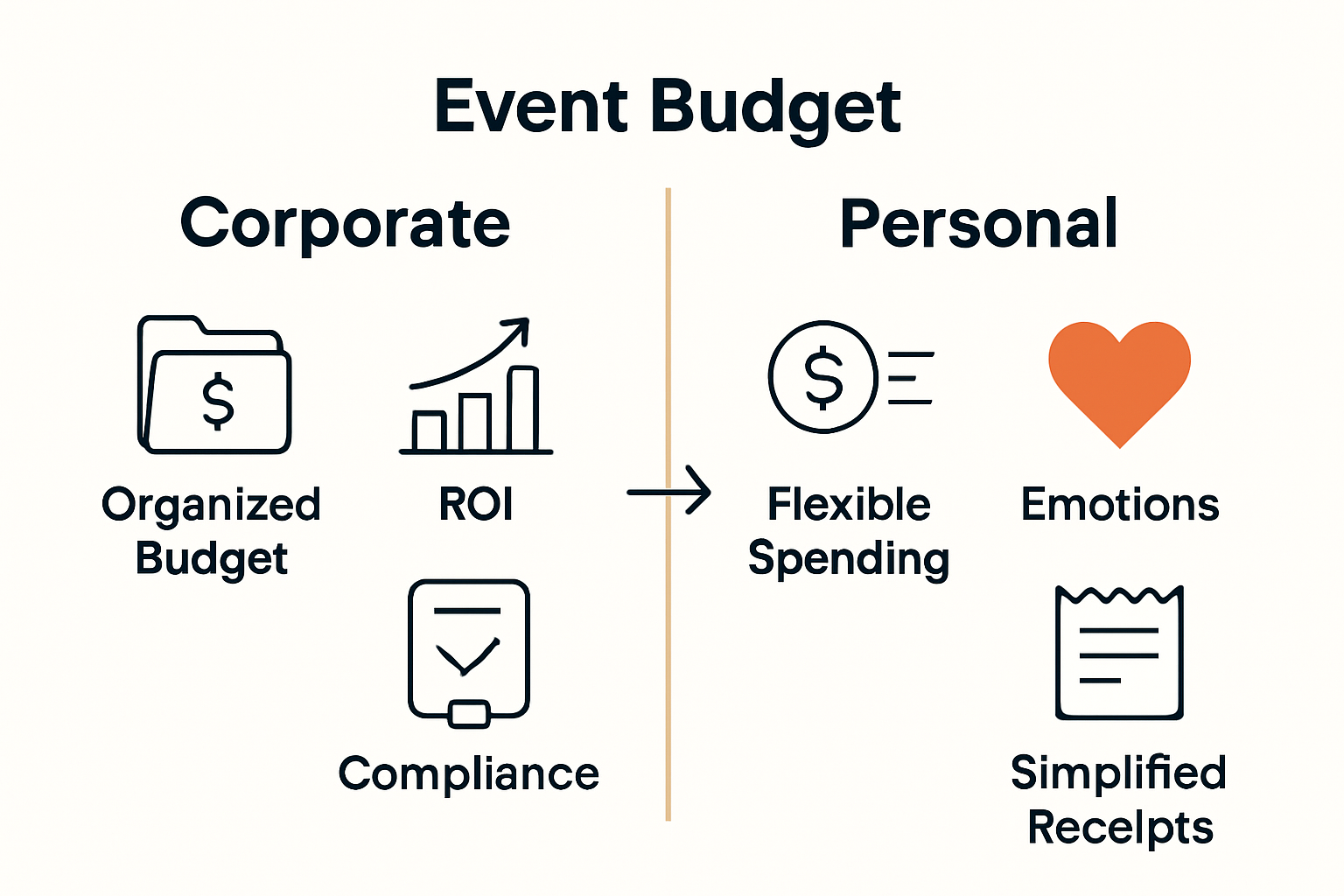 The financial implications are typically more straightforward, driven by personal budget constraints and emotional investment rather than strategic organizational objectives. Branding considerations are minimal, focusing on personal expression and celebration rather than corporate messaging or reputation management.
Key financial and branding distinctions include:
-
Corporate Event Financial Characteristics:
- Structured budget allocations
- Potential tax deductibility
- Alignment with organizational financial strategies
- Comprehensive expense tracking
-
Personal Event Financial Characteristics:
- Emotionally driven spending
- Individual budget flexibility
- Limited financial documentation requirements
- Personal value-based investment
Effective event planning demands a nuanced understanding of these legal, financial, and branding landscapes. Professionals must adapt their approach to meet the unique regulatory, financial, and representational requirements of each event type, ensuring both compliance and meaningful participant experiences.
Mistakes to Avoid in Event Planning
Event planning is a complex process fraught with potential pitfalls that can derail even the most meticulously designed gatherings. Derby Repository research emphasizes the critical importance of building resilience and understanding stakeholder complexities to prevent project failures, highlighting that many event planning mistakes stem from inadequate stakeholder engagement and communication.
Stakeholder management represents a crucial area where event planners frequently encounter significant challenges. ScienceDirect research identifies common pitfalls that can result in project delays and increased costs, particularly when managing conflicting perspectives across different event types. Corporate events are especially vulnerable to these risks, requiring sophisticated navigation of multiple organizational interests.
Common mistakes in event planning can be categorized by event type:
Corporate Event Planning Mistakes:
- Neglecting clear communication protocols
- Failing to align event objectives with organizational strategy
- Overlooking compliance and legal requirements
- Inadequate budget forecasting
- Insufficient risk management strategies
Personal Event Planning Mistakes:
- Underestimating total event costs
- Poor guest list management
- Lack of contingency planning
- Emotional decision making
- Overcomplicating event logistics
Successful event planning demands a proactive approach that anticipates potential challenges, maintains flexible communication channels, and develops robust contingency strategies. By understanding these common pitfalls, event planners can create more resilient, effective, and memorable experiences that meet the unique expectations of both corporate and personal event contexts.
Expert Event Planning Solutions Tailored to Your Unique Needs
Organizing a successful event means understanding the distinct challenges that arise when planning corporate versus personal gatherings. Whether you are aiming to align your event with strategic business goals or create a heartfelt personal celebration, the nuances of stakeholder management, budgeting, legal considerations, and branding play a critical role. Navigating these complexities with confidence can prevent costly mistakes and ensure memorable experiences for all attendees.
At Morocco Events: Morocco’s Premier Event and Wedding Planner, we specialize in bridging the gap between corporate professionalism and personal warmth. Our expert team delivers tailored solutions that respect both organizational objectives and your emotional vision. From intimate weddings to large-scale conferences in Marrakech and beyond, we provide creative branding, reliable vendor networks, and meticulous planning to bring your vision to life.
Ready to transform your next corporate or personal event into a flawless occasion? Explore how our full-service event management expertise can make a difference by visiting MoroccoEvents.com. Contact us today and take the first step toward a seamless, impactful event planned just for you.
Frequently Asked Questions
What are the main differences between corporate events and personal events?
Corporate events are focused on achieving specific organizational goals and involve structured planning, professional stakeholders, and measurable outcomes. Personal events prioritize emotional connections, celebrating individual milestones, and are typically more intimate and flexible.
How do stakeholder roles differ in corporate and personal events?
In corporate events, stakeholders include executives, employees, and clients with formal roles and expectations. Personal events involve family and friends who participate based on emotional connections and personal relationships, leading to a more collaborative and informal planning process.
What financial considerations should be taken into account for corporate versus personal events?
Corporate events usually have structured budgets, compliance with organizational policies, and ROI calculations. Personal events, on the other hand, involve emotional budgeting, flexibility in spending, and generally less financial documentation.
What are some common mistakes to avoid when planning corporate and personal events?
Common mistakes in corporate event planning include failing to align objectives with organizational strategy and neglecting legal requirements. Personal event planning mistakes often involve underestimating costs and poor guest list management.