Corporate Event Terminology: The Complete Guide
Corporate events power some of the most significant decisions and collaborations in business today. With over $1.5 trillion spent globally on meetings and events every year, these gatherings are anything but ordinary. Success depends on understanding the unique terminology, roles, and formats that drive effective event planning and execution. Whether you are managing a small staff retreat or a major industry convention, knowing the right terms is key to seamless organization and measurable results.
Table of Contents
- Defining Corporate Event Terminology
- Essential Event Types And Formats Explained
- Key Roles And Responsibilities Glossary
- Vendor Agreements And Contract Terms
- Navigating Risks And Common Pitfalls
Key Takeaways
| Point | Details |
|---|---|
| Purpose of Corporate Events | Corporate events are strategic gatherings aimed at achieving specific organizational objectives, fostering knowledge exchange and networking. |
| Types of Corporate Events | These events can be categorized into internal meetings, external engagements, networking opportunities, and celebratory occasions, each serving distinct goals. |
| Roles in Event Management | Successful corporate event execution relies on a collaborative team comprising strategic planners, coordinators, creative designers, and technical support specialists. |
| Risk Management | Proactive risk mitigation strategies, including contingency planning and detailed vendor agreements, are essential for ensuring smooth event execution and avoiding common pitfalls. |
Defining Corporate Event Terminology
Corporate events are structured professional gatherings organized by businesses to achieve specific strategic objectives. According to Wikipedia, corporate entertainment encompasses private events designed for staff, clients, or stakeholders, which can include conventions, conferences, retreats, and team-building exercises.
These professional gatherings serve multiple purposes beyond simple social interaction. Wikipedia highlights that professional conferences are specialized events where experts converge to discuss organizational matters, professional developments, and industry status. The core goal is typically knowledge exchange, networking, and strategic alignment.
Key characteristics of corporate events include:
- Purposeful planning with clear organizational objectives
- Targeted audience engagement (employees, clients, stakeholders)
- Structured programming and professional facilitation
- Measurable outcomes and strategic impact
Corporate events can be categorized into several primary types:
- Internal events (staff meetings, training sessions)
- External events (client conferences, product launches)
- Networking events (industry gatherings, professional symposiums)
- Celebratory events (milestone recognitions, annual awards)
At their core, these events represent sophisticated communication platforms designed to foster collaboration, share knowledge, and drive organizational momentum. Corporate event agency guide can help organizations navigate the complex landscape of professional event planning and execution.
Essential Event Types and Formats Explained
Conventions represent a fundamental format in corporate event planning, bringing together professionals with shared interests and objectives. According to Wikipedia), a convention is a large gathering characterized by keynote speakers, vendor displays, and diverse interactive activities designed to facilitate comprehensive industry engagement.
Academic conferences offer another critical event format, particularly for knowledge-driven organizations. Wikipedia describes these events as platforms where researchers present and discuss scholarly work through presentations, panel discussions, and specialized workshops, serving as crucial channels for professional information exchange.
Corporate event types can be strategically classified based on their primary objectives:
Professional Networking Events
- Industry conferences
- Trade shows
- Symposiums
- Professional development seminars
Internal Organizational Events
- Annual company meetings
- Strategic planning retreats
- Team building workshops
- Employee recognition ceremonies
External Engagement Events
- Client appreciation gatherings
- Product launch presentations
- Stakeholder communication forums
- Investor relations meetings
Successful event selection requires careful alignment with organizational goals, target audience expectations, and desired outcomes. Corporate event agency guide can provide nuanced strategies for selecting and executing the most appropriate event format for specific business objectives.
Key Roles and Responsibilities Glossary
Corporate event management involves a complex ecosystem of specialized professionals who collaborate to create seamless, impactful experiences. As noted by Wikipedia, establishing a shared understanding of event processing terminology is crucial for developing standardized professional practices.
The core roles in corporate event planning represent distinct yet interconnected responsibilities that ensure comprehensive event execution:
Strategic Planning Roles
- Event Director: Overall strategic vision and executive leadership
- Event Strategist: Develops comprehensive event concept and objectives
- Program Manager: Coordinates multiple event components and timelines
Operational Execution Roles
- Event Coordinator: Manages logistical details and vendor communications
- Production Manager: Oversees technical and audiovisual elements
- Logistics Specialist: Handles transportation, venue, and resource allocation
Creative and Design Roles
- Creative Director: Develops event theme and aesthetic concept
- Graphic Designer: Creates visual branding and promotional materials
- Experiential Designer: Crafts interactive event experiences
Technical Support Roles
- Technical Director: Manages technological infrastructure
- AV Technician: Handles sound, lighting, and multimedia systems
- IT Support Specialist: Ensures digital platform and communication technologies function smoothly
Effective corporate events require seamless collaboration across these specialized roles.
IMAGE:descriptive_key_1] [Corporate event agency guide provides deeper insights into optimizing team dynamics and professional interactions throughout the event planning process.
Vendor Agreements and Contract Terms
Vendor agreements form the critical backbone of corporate event planning, establishing clear expectations and legal frameworks for professional collaborations. According to research from Amazon Web Services, the events industry involves diverse buyers with unique contractual considerations, emphasizing the importance of precise and comprehensive documentation.
Key Components of Vendor Contracts
- Scope of Services: Detailed description of vendor responsibilities
- Financial Terms: Pricing, payment schedules, and potential additional costs
- Performance Metrics: Specific deliverables and quality standards
- Cancellation Provisions: Conditions and penalties for event modification or cancellation
Critical Contractual Safeguards
- Clear definition of service boundaries
- Explicit performance expectations
- Comprehensive liability clauses
- Dispute resolution mechanisms
The events industry requires meticulous attention to contractual details. Negotiation strategies should focus on creating mutually beneficial agreements that protect both the event organizer and the vendor’s interests.
Specific vendor categories require tailored contractual approaches:
- Venue Providers: Space rental, capacity, technical specifications
- Technical Services: AV equipment, staging, lighting requirements
- Catering Vendors: Menu specifications, dietary accommodations, service standards
- Entertainment Providers: Performance details, technical requirements, compensation structures
Professional event planning demands a strategic approach to vendor relationships. Corporate event agency guide offers comprehensive insights into developing robust vendor management strategies that ensure seamless event execution.
Navigating Risks and Common Pitfalls
Corporate event management involves navigating complex risk landscapes that can potentially derail even the most meticulously planned gatherings. As research from arXiv highlights, event detection and management fundamentally require addressing challenges like data scarcity and comprehensive coverage, which directly impact risk mitigation strategies.
Primary Risk Categories
- Financial Risks: Budget overruns, unexpected expenses
- Logistical Risks: Venue complications, transportation issues
- Technical Risks: Equipment failures, communication breakdowns
- Personnel Risks: Staffing shortages, coordination challenges
Critical Risk Mitigation Strategies
- Comprehensive contingency planning
- Detailed vendor vetting processes
- Robust communication protocols
- Flexible event design frameworks
According to arXiv, strategic approaches like utilizing type-specific prompts can significantly improve risk detection and management performance.
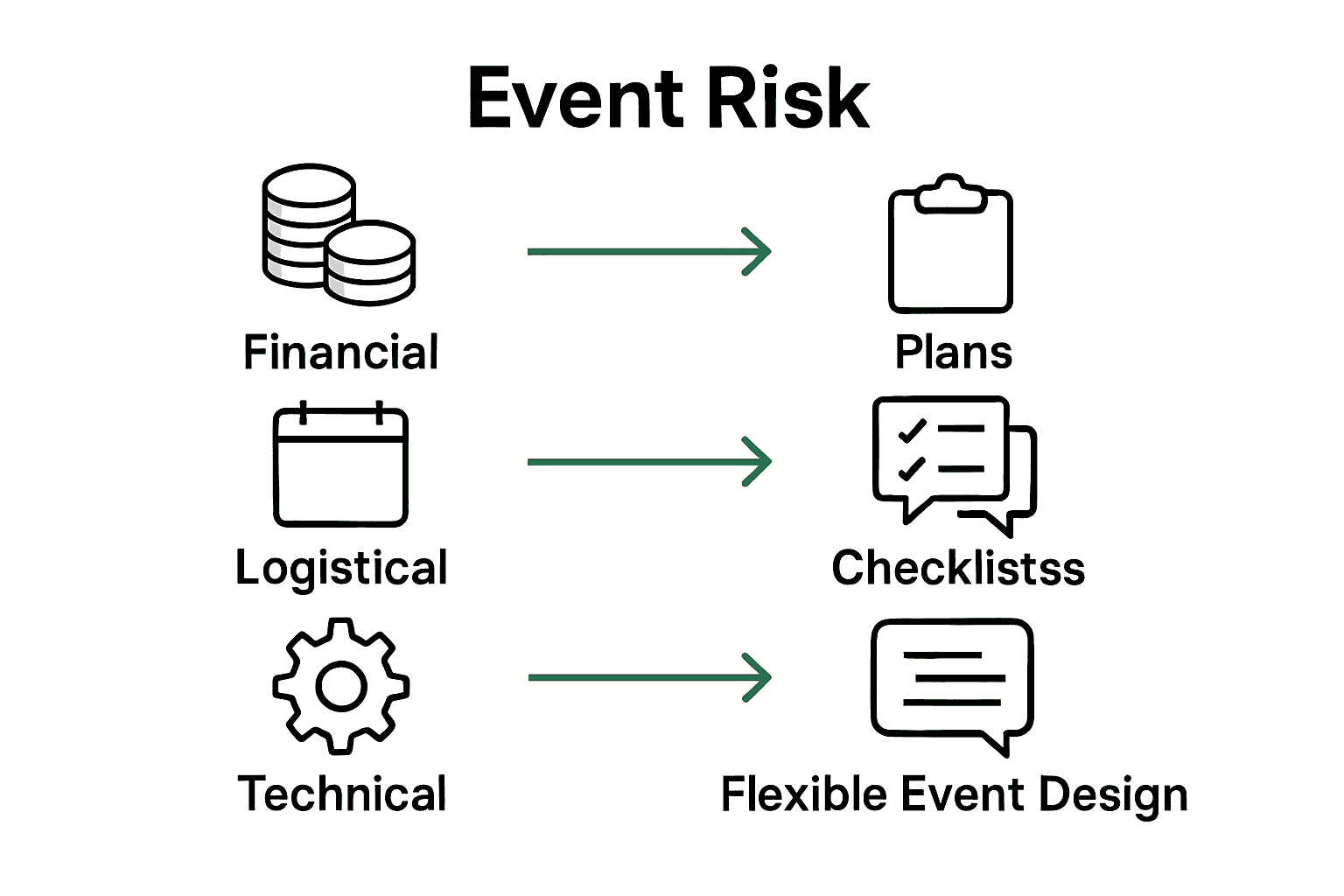 Proactive planning becomes the cornerstone of successful event execution.
Common Event Planning Pitfalls
- Insufficient budget allocation
- Inadequate timeline management
- Poor vendor communication
- Lack of detailed contingency plans
- Overlooking potential technical failures
Navigating these risks requires a holistic approach that combines strategic foresight, detailed documentation, and adaptable problem-solving techniques. Corporate event agency guide provides advanced strategies for developing comprehensive risk management frameworks that protect event objectives and organizational investments.
Elevate Your Corporate Events with Expert Guidance and Seamless Execution
Planning corporate events can feel overwhelming when navigating complex terminology, coordinating specialized roles, and managing intricate vendor contracts. The challenge is clear: you need a trusted partner who understands every term, role, and risk involved while delivering an unforgettable experience that drives your organizational goals.
At Morocco Events: Morocco’s Premier Event and Wedding Planner, we transform your corporate vision into reality. Our expert team offers customized solutions rooted in deep knowledge of corporate event strategies, risk mitigation, and vendor management. From immersive conventions to sophisticated client conferences, we handle all the moving parts so you can focus on making meaningful connections. Start planning your next successful event now by exploring our full range of services at MoroccoEvents.com. Discover how our experience, multilingual capabilities, and trusted vendor network can create flawless corporate gatherings tailored to your needs.
Frequently Asked Questions
What are the main types of corporate events?
Corporate events can be categorized into internal events, external events, networking events, and celebratory events. Internal events include staff meetings and training sessions, while external events cover client conferences and product launches.
What roles are essential in corporate event management?
Key roles in corporate event management include the Event Director, Event Strategist, Event Coordinator, Production Manager, Creative Director, and Technical Director. Each plays a crucial part in ensuring successful planning and execution.
How do vendor agreements impact corporate events?
Vendor agreements outline the scope of services, financial terms, performance metrics, and cancellation provisions. Having detailed contracts helps ensure all parties understand their responsibilities and protects against potential disputes.
What are the primary risk categories in corporate event planning?
Primary risk categories include financial risks (like budget overruns), logistical risks (such as venue issues), technical risks (equipment failures), and personnel risks (staff shortages). Identifying these risks helps in planning effective mitigation strategies.
Recommended
- Corporate Events Definition: Complete Professional Guide – Morocco Events
- What Is Sports Event Management? Complete Guide – Morocco Events
- corporate event agency, memorable experiences – Morocco Events
- 7 Essential Steps for an Event Planning Checklist Morocco – Morocco Events
- Corporate Venue Finding | Event Spaces | Meeting Rooms | UK | International Venues