Corporate Event Planning Explained: Complete Process Guide
More than 80 percent of american companies now invest in professional event planning to drive business goals and employee engagement. Planning a corporate event involves much more than picking a venue or sending invites. With stakes high and expectations even higher, understanding event fundamentals ensures your organization delivers powerful, memorable experiences every time. This guide breaks down the essentials so you can plan with confidence and get measurable results.
Table of Contents
- Defining Corporate Event Planning Fundamentals
- Major Event Types And Key Differences
- Essential Steps In Event Planning Process
- Budgeting, Vendor Selection, And Logistics
- Risk Management And Common Pitfalls
Key Takeaways
| Point | Details |
|---|---|
| Comprehensive Planning is Essential | Effective corporate event planning requires a strategic approach, including thorough budgeting, venue selection, and logistics management. |
| Understand Different Event Types | Recognizing the distinct characteristics and goals of diverse corporate events is crucial for maximizing engagement and impact. |
| Risk Management is Critical | Proactive identification and management of potential risks ensure smooth event execution and alignment with organizational objectives. |
| Leverage Technology for Success | Integrating digital tools and data-driven strategies enhances participant experiences and overall event effectiveness. |
Defining Corporate Event Planning Fundamentals
Corporate event planning is a strategic process of designing, organizing, and executing professional gatherings that serve specific business objectives. At its core, event planning involves comprehensive coordination of multiple complex elements to create meaningful professional experiences. Corporate events range from internal team meetings and conferences to large-scale product launches and international industry conventions.
The fundamental process of corporate event planning encompasses several critical stages. Corporate event professionals must meticulously manage key components including budgeting, venue selection, logistical coordination, and participant engagement. According to research, successful event planning requires careful attention to details such as scheduling, permit acquisition, transportation arrangements, vendor management, and precise execution of the event’s strategic goals.
Essential elements of effective corporate event planning include:
- Comprehensive initial strategy development
- Detailed budget management
- Precise venue and resource selection
- Technical and logistical coordination
- Participant experience design
- Post-event evaluation and reporting
Strategic event planning transforms professional gatherings from simple meetings into powerful communication platforms. By understanding each event’s unique purpose and audience, planners can design experiences that not only meet organizational objectives but also create memorable, impactful interactions that drive business success.
Major Event Types and Key Differences
Corporate events represent a diverse landscape of professional gatherings, each designed to serve unique organizational objectives. Corporate event management encompasses multiple categories that range from internal team-building activities to large-scale international conferences. Understanding the nuanced differences between these event types is crucial for developing targeted strategies that maximize engagement and achieve specific business goals.
The primary categories of corporate events include:
- Conferences and Summits: Large-scale professional gatherings focused on knowledge sharing and networking
- Training and Team Building: Events designed to enhance employee skills and organizational cohesion
Each event type follows a sequential management approach that involves three critical stages: pre-event planning, during-event execution, and post-event evaluation. These stages adapt dynamically based on the specific requirements and objectives of each event type, ensuring a tailored approach to professional gathering management.
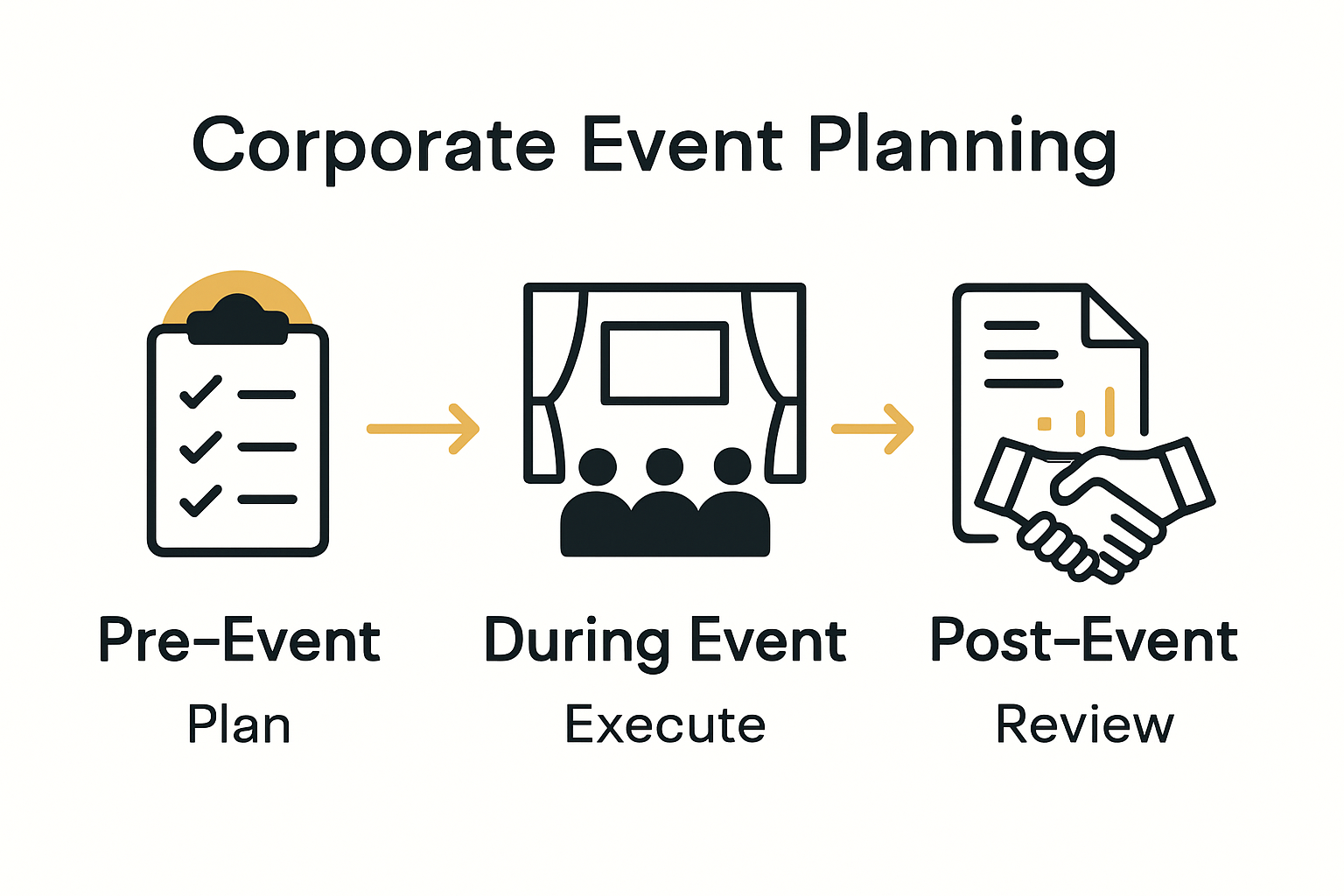
Technological advancements and evolving participant expectations continue to transform traditional event management practices. Modern corporate events now integrate sophisticated digital platforms, interactive experiences, and data-driven strategies to create more engaging, inclusive, and impactful professional gatherings. By understanding the unique characteristics and strategic purposes of different event types, organizations can design experiences that not only meet immediate objectives but also contribute to long-term business growth and professional development.
Essential Steps in Event Planning Process
Corporate event planning is a structured methodology that requires meticulous attention to detail and strategic thinking. Corporate event planning checklists provide event professionals with a systematic approach to transforming conceptual ideas into successful professional gatherings. The comprehensive process involves multiple interconnected stages that ensure seamless execution and achievement of organizational objectives.
Based on established event management research, the essential steps in event planning include:
- Idea and Proposal Development
- Feasibility Assessment
- Objective Establishment
- Detailed Implementation Planning
- Resource Allocation
- Execution Monitoring
- Post-Event Evaluation
The strategic planning framework emphasizes critical components such as determining precise objectives, identifying target audiences, establishing realistic timelines, developing comprehensive budgets, and designing engaging event experiences. Successful event planners must skillfully navigate these stages while remaining adaptable to unexpected challenges and emerging opportunities.

Modern event planning transcends traditional linear approaches by integrating technology, data analytics, and innovative communication strategies. Event professionals must continuously evolve their methodologies, leveraging digital platforms and interactive technologies to create more immersive, meaningful professional experiences that deliver tangible value to organizations and participants alike.
Budgeting, Vendor Selection, and Logistics
Successful corporate event planning hinges on three critical interconnected components: strategic budgeting, meticulous vendor selection, and comprehensive logistics management. Event logistics planning requires a systematic approach that balances financial constraints with exceptional event delivery, ensuring every dollar invested translates into meaningful professional experiences.
Key considerations for effective budgeting and vendor management include:
- Comprehensive Cost Analysis
- Vendor Performance Evaluation
- Risk Assessment and Mitigation
- Transparent Financial Tracking
- Negotiation and Contract Management
The event-supplier management process demands a strategic approach to optimizing resource allocation and minimizing potential operational challenges. Event professionals must develop robust selection criteria that evaluate vendors across multiple dimensions, including cost-effectiveness, reliability, innovation, and alignment with organizational objectives.
Modern event planning transcends traditional procurement models by integrating technology-driven solutions and data-driven vendor assessment strategies. Successful event managers leverage sophisticated evaluation frameworks, digital collaboration tools, and comprehensive performance metrics to create seamless, high-impact event experiences that deliver exceptional value while maintaining strict financial discipline.
Risk Management and Common Pitfalls
Corporate event planning demands sophisticated risk management strategies that anticipate and mitigate potential challenges before they escalate. Successful event professionals understand that proactive identification of potential risks is significantly more effective than reactive problem solving, requiring a comprehensive approach to uncertainty and contingency planning.
Key risk management strategies include:
- Comprehensive Scenario Planning
- Detailed Contingency Mapping
- Financial Risk Assessment
- Communication Protocol Development
- Vendor Performance Monitoring
The event chain methodology provides a powerful framework for understanding and managing interconnected risks that can potentially disrupt event schedules and outcomes. By analyzing potential event chains and their potential cascading impacts, planners can develop more robust and resilient event strategies that maintain flexibility and adaptability.
Effective risk management also requires strategic crisis communication approaches that prioritize transparent, timely, and coordinated responses to unexpected challenges. Modern event professionals must integrate advanced technological tools, predictive analytics, and comprehensive communication protocols to rapidly identify, assess, and mitigate potential risks, ensuring that organizational objectives remain protected throughout the event lifecycle.
Elevate Your Corporate Events with Expert Planning and Execution
Corporate event planning involves navigating complex challenges such as budgeting, vendor coordination, and risk management. This article highlights critical steps including strategic budgeting, venue selection, and seamless logistics that often feel overwhelming without the right support. If you want to transform your corporate gathering into a memorable experience that meets your strategic goals while avoiding common pitfalls, expert guidance is essential.
At Morocco Events: Morocco’s Premier Event and Wedding Planner, we specialize in delivering tailored, high-impact corporate event solutions across Morocco. Leveraging our vast vendor network, multilingual team, and innovative technologies, we handle every detail from initial strategy to flawless execution. Make your next corporate event stand out by partnering with trusted professionals who understand the intricacies of corporate event planning.
Contact us today at MoroccoEvents.com to start crafting an unforgettable event experience that aligns perfectly with your business objectives. Act now to benefit from our expertise and ensure your event is executed with precision and style.
Frequently Asked Questions
What are the main stages of corporate event planning?
Corporate event planning typically involves three critical stages: pre-event planning, during-event execution, and post-event evaluation. These stages ensure that each event is tailored to meet specific objectives and provides a seamless experience for participants.
How can I effectively manage a corporate event budget?
To effectively manage a corporate event budget, consider comprehensive cost analysis, transparent financial tracking, and vendor negotiation. It’s essential to allocate resources appropriately and monitor spending to ensure that every dollar contributes to meaningful experiences.
What factors should I consider when selecting a venue for a corporate event?
When selecting a venue, consider factors such as location, capacity, amenities, and suitability for the event type. Additionally, ensure that the venue aligns with the event’s objectives and budget, and assess logistical arrangements such as transportation and accessibility.
What are some common risks associated with corporate event planning?
Common risks in corporate event planning include scheduling conflicts, vendor reliability, financial constraints, and unforeseen circumstances like weather disruptions. Effective risk management strategies involve comprehensive scenario planning and developing contingency plans to address potential challenges.