Corporate Event Planning Workflow for Seamless Execution
Nearly 60 percent of multinational executives say that event success hinges on nailing the planning basics from day one. If you are an American or global corporate event manager preparing for a high-profile gathering in Marrakech, the stakes and expectations are high. This guide explores practical steps for defining clear objectives, choosing the best venues and vendors, designing multimedia experiences, and powering flawless onsite operations that exceed client expectations.
Table of Contents
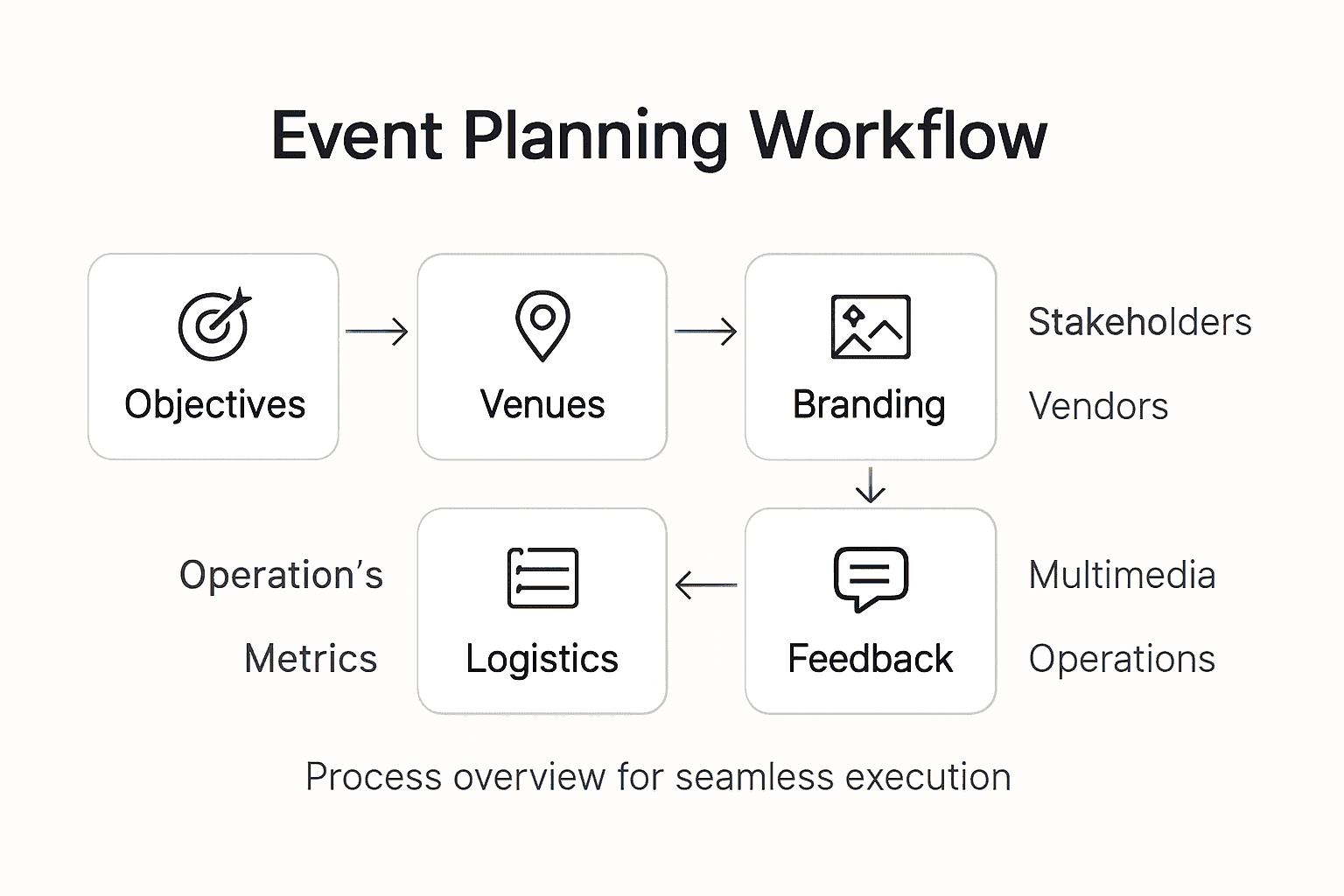
- Step 1: Define Event Objectives And Requirements
- Step 2: Select Venues And Coordinate Vendor Partnerships
- Step 3: Design Branding And Multimedia Experiences
- Step 4: Manage Logistics And On-Site Operations
- Step 5: Verify Event Quality And Client Satisfaction
Quick Summary
| Key Point | Explanation |
|---|---|
| 1. Define Clear Objectives | Establish specific, measurable goals with stakeholders to guide your event planning effectively. |
| 2. Select the Right Venue | Use a venue assessment matrix to ensure the location aligns with your event’s needs and corporate identity. |
| 3. Build Strong Vendor Partnerships | Create a vendor selection process focusing on reliability and compatibility to enhance event execution quality. |
| 4. Plan Logistics Meticulously | Develop a detailed operational timeline and communication protocol to ensure seamless on-site management. |
| 5. Collect Feedback for Improvement | Implement multiple feedback mechanisms to assess success and identify areas for enhancement in future events. |
Step 1: Define event objectives and requirements
Successfully launching a corporate event begins with crystal-clear objective setting. Your event blueprint determines everything that follows, transforming abstract ideas into a strategic roadmap for execution.
Start by conducting a comprehensive stakeholder analysis to unpack your precise event goals. This means sitting down with key decision makers and drilling into specific outcomes. Are you aiming to launch a product, reward top performers, strengthen client relationships, or facilitate interdepartmental networking? Event management requires identifying target audiences and devising strategic concepts that align with your core corporate objectives. Each objective should be specific, measurable, and tied directly to broader organizational strategies.
Break down your requirements methodically. Create a detailed matrix that captures critical parameters like attendee demographics, desired engagement levels, budget constraints, and expected return on investment. Consider logistical elements such as venue capacity, technological needs, catering specifications, and potential scheduling conflicts. Remember that thorough upfront planning prevents costly last-minute adjustments and ensures a smoother event execution.
Here’s a summary of core event planning requirements and their strategic impact:
| Requirement Category | Key Focus Area | Strategic Impact |
|---|---|---|
| Audience Demographics | Identify attendee profiles | Tailored experiences |
| Budget Constraints | Define financial boundaries | Resource optimization |
| Venue Logistics | Assess accessibility and capacity | Smooth flow, increased comfort |
| Technology Needs | Specify audiovisual and IT needs | Enhanced engagement |
| Return on Investment | Measure event value | Organizational growth |
Pro tip: Develop a weighted scoring system for evaluating your event objectives to prioritize the most impactful goals and allocate resources strategically.
Step 2: Select venues and coordinate vendor partnerships
Selecting the perfect venue and building strong vendor partnerships form the critical infrastructure of your corporate event strategy. Your choices here will directly impact the event’s success, comfort, and overall attendee experience.
Event management requires strategic site selection and third party coordination that balances practical logistics with creative vision. Begin by creating a comprehensive venue assessment matrix that evaluates potential locations against your specific event objectives. Consider factors like capacity, technological capabilities, accessibility, parking, ambient atmosphere, and alignment with your corporate brand. Look beyond surface aesthetics to understand each venue’s technical infrastructure. Can they support your audiovisual needs? Do they have reliable wifi? What are their backup power systems? Simultaneously, develop a robust vendor selection process that prioritizes reliability, expertise, and collaborative potential.

When evaluating potential vendors, focus on their track record of delivering high-quality services for similar corporate events. Request comprehensive portfolios, client references, and detailed proposals that demonstrate their understanding of your specific requirements. Establish clear communication channels and expectations upfront. Draft flexible contracts that outline deliverables, performance metrics, contingency plans, and payment structures. Remember that successful vendor partnerships are built on mutual understanding, respect, and shared commitment to event excellence.
For reference, here’s a comparison of critical vendor selection criteria:
| Selection Criterion | Why It Matters | Potential Risks of Overlooking |
|---|---|---|
| Reliability | Ensures timely delivery | Event disruptions |
| Expertise | High-quality service | Missed expectations |
| Brand Alignment | Consistent event messaging | Incoherent experience |
| Flexibility | Adapts to changes | Poor issue resolution |
Pro tip: Create a vendor scorecard with weighted criteria to objectively evaluate and compare potential partners, ensuring you select the most aligned and professional service providers.
Step 3: Design branding and multimedia experiences
Transforming your corporate event into a memorable brand narrative requires strategic multimedia design that connects emotionally and intellectually with your audience. This step is about crafting an immersive experience that communicates your corporate identity and event objectives.
Meeting and event design practices emphasize integrating creative storytelling with audiovisual production to create compelling brand experiences. Start by developing a comprehensive visual identity strategy that extends beyond traditional logo placement. Consider how color palettes, typography, motion graphics, and interactive displays can communicate your brand’s personality. Map out a multimedia journey that guides attendees through different emotional and informational touchpoints. This might include dynamic digital backdrops, personalized welcome screens, interactive brand walls, and strategically placed digital signage that tells your corporate story.
Ensure your multimedia elements are not just visually stunning but purposeful. Each design component should serve a specific communication goal whether that is educating attendees about company innovations, showcasing client success stories, or creating networking opportunities. Collaborate closely with your creative team to develop multimedia assets that are technically flawless and emotionally resonant. Test all audiovisual equipment thoroughly, create backup systems, and design flexible presentation formats that can adapt to unexpected technical challenges.
Pro tip: Create a multimedia design brief that explicitly links each visual element to a specific event objective, ensuring your creative execution is both artistically impressive and strategically aligned.
Step 4: Manage logistics and on-site operations
Successful corporate event execution hinges on meticulous logistical planning and real-time operational management. This critical phase transforms your carefully crafted strategy into a seamless, professional experience for every attendee.
Event management operations require comprehensive planning for resource allocation and problem solving across multiple dynamic dimensions. Begin by creating a detailed operational timeline that maps out every logistical element from setup to teardown. Develop a robust communication protocol that connects your core event team through dedicated communication channels. Use digital coordination tools that enable instant messaging, location tracking, and real-time task management. Assign specific operational roles with clear responsibilities: designate team members for registration management, technical support, attendee guidance, vendor coordination, and emergency response.
Prepare extensively for potential disruptions by developing comprehensive contingency plans. Conduct multiple scenario walkthroughs that simulate potential challenges such as technical failures, transportation delays, or unexpected attendance fluctuations. Establish clear escalation protocols that define exactly how and when team members should respond to unexpected situations. Maintain a centralized operational command center where team leaders can monitor event flow, make rapid decisions, and coordinate immediate responses. Implement redundant systems for critical event infrastructure like audiovisual equipment, internet connectivity, and power supplies to minimize potential service interruptions.
Pro tip: Create a digital operations dashboard that provides real-time visibility into all event logistics, allowing instant tracking and management of resources, schedules, and potential issues.
Step 5: Verify event quality and client satisfaction
The ultimate measure of your corporate event’s success lies not just in its execution but in how effectively it meets and exceeds client expectations. This critical final stage transforms your event from a mere logistical exercise into a meaningful business experience.
Quality performance metrics provide a systematic approach to assessing event success and client satisfaction across multiple dimensions. Develop a comprehensive feedback strategy that begins before the event concludes. Design multiple feedback collection mechanisms including real-time digital surveys, interactive touchscreens, personalized follow-up emails, and one-on-one debrief sessions. Create nuanced evaluation frameworks that capture both quantitative metrics like attendance rates and engagement levels and qualitative insights about attendee experience, emotional resonance, and perceived value.
Analyze feedback data with a critical and holistic perspective. Look beyond surface level responses to understand deeper patterns and insights. Cross reference participant feedback with your original event objectives to measure actual performance. Identify specific areas of excellence and potential improvement. Prepare a detailed post event report that not only summarizes feedback but provides actionable recommendations for future events. Consider creating a longitudinal tracking system that allows you to monitor client satisfaction trends over multiple events and demonstrates your commitment to continuous improvement.
Pro tip: Implement a weighted feedback scoring system that prioritizes metrics most critical to your specific corporate event objectives, enabling more precise and meaningful performance assessment.
Elevate Your Corporate Event Planning with MoroccoEvents Expertise
Corporate event planning demands precise objective setting, seamless vendor collaboration, and flawless logistics to achieve memorable and impactful results. If navigating venue selection, multimedia branding, and operational management feels overwhelming, you are not alone. Many event planners face challenges perfectly aligning event goals with on-site execution while ensuring client satisfaction and strategic return on investment.
At Morocco Events: Morocco’s Premier Event and Wedding Planner we specialize in transforming these complex workflows into effortlessly executed experiences across Morocco. Our expert team offers tailored solutions including venue sourcing, trusted vendor coordination, and cutting-edge multimedia design to ensure your corporate event reflects your brand identity with sophistication and style. By partnering with us, you gain access to meticulous planning and innovative technology combined with deep local knowledge in Marrakech and beyond.
Ready to turn your event vision into reality with precision and creativity? Visit MoroccoEvents.com now and explore how our professional corporate event planning services can streamline your next project. Don’t wait to secure your ideal venue and trusted vendors for an event that exceeds expectations.
Frequently Asked Questions
What are the key objectives to define before planning a corporate event?
Clearly outline your event goals such as product launches, networking opportunities, or client engagement. Conduct stakeholder interviews to gather specific goals and ensure they align with your organization’s broader strategies.
How can I identify the right venue for my corporate event?
Assess potential venues against criteria such as capacity, accessibility, and technology capabilities. Create a venue assessment matrix to compare options and ensure they meet your event’s specific needs.
What steps should I take to manage vendor partnerships effectively?
Establish a clear selection process by evaluating vendors based on reliability and expertise. Use a vendor scorecard with weighted criteria to objectively compare candidates and ensure they align with your event objectives.
How do I design multimedia elements that enhance attendee experience?
Create a multimedia design brief that connects each visual element to your event objectives. Incorporate elements like dynamic displays and interactive signage that not only look good but also communicate key messages.
What operational strategies can help ensure smooth on-site management during the event?
Develop a detailed operational timeline and assign specific roles to your team members for effective communication. Implement real-time tracking tools to monitor schedules and resources, allowing you to respond quickly to any issues that arise.
How can I effectively measure client satisfaction after the event?
Implement a comprehensive feedback strategy using various collection methods like surveys and follow-up sessions. Analyze the feedback to identify strengths and areas for improvement to enhance future events.